







Categories : Blog

Reusable or recyclable: which should you prioritise?

In the face of the ecological emergency, one question keeps coming back in businesses, local authorities and households alike: should we focus on reusable or recyclable? The debate is far from a simple binary choice. Behind each option lie distinct environmental, economic and logistical challenges.

Every year in Europe, millions of tonnes of packaging waste are generated. Despite advances in sorting, the effective recycling rate for plastics barely exceeds 35% across the European Union (source: European Parliament). The rest ends up in landfill, incinerated or, worse, in nature. This reality is pushing an increasing number of stakeholders to question the relevance of each model.

In this article, we will precisely define what reusable packaging and recyclable packaging are, compare their advantages and limitations, explore their role in sustainable catering, and give you the keys to making an informed choice. We will also share the lessons from our own CSR commitment documented in our 2025 CSR report.

Understanding reusable and recyclable packaging

What is reusable packaging?

reusable package is designed to be used multiple times for an identical or similar purpose. It is manufactured from durable materials  glass, stainless steel, food-grade rigid plastic, coated fabric  capable of withstanding numerous washing and refilling cycles without significant deterioration.

Some concrete examples:

  • Returnable glass bottles, historically used for milk or beer, and making a major comeback in 2025-2026.
  • Stainless steel or glass containers for bulk sales.
  • Reusable gastronorm containers used in collective catering.
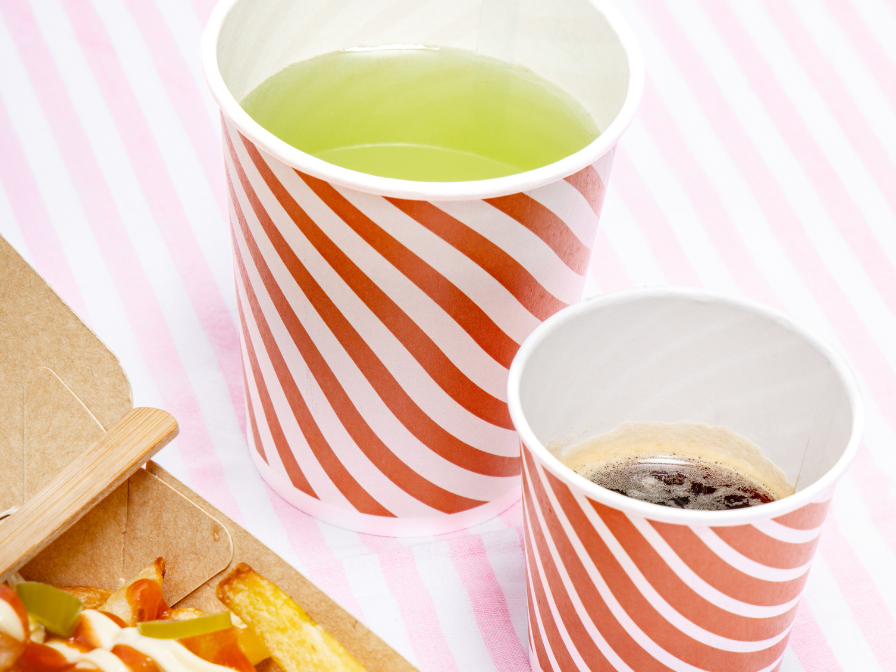
  • Reusable cups distributed at sporting or cultural events.

The fundamental principle is straightforward: extend the lifespan of the container to reduce the amount of waste generated at source. The European Packaging and Packaging Waste Regulation (PPWR), adopted in 2024, sets ambitious reuse targets for several sectors by 2030.

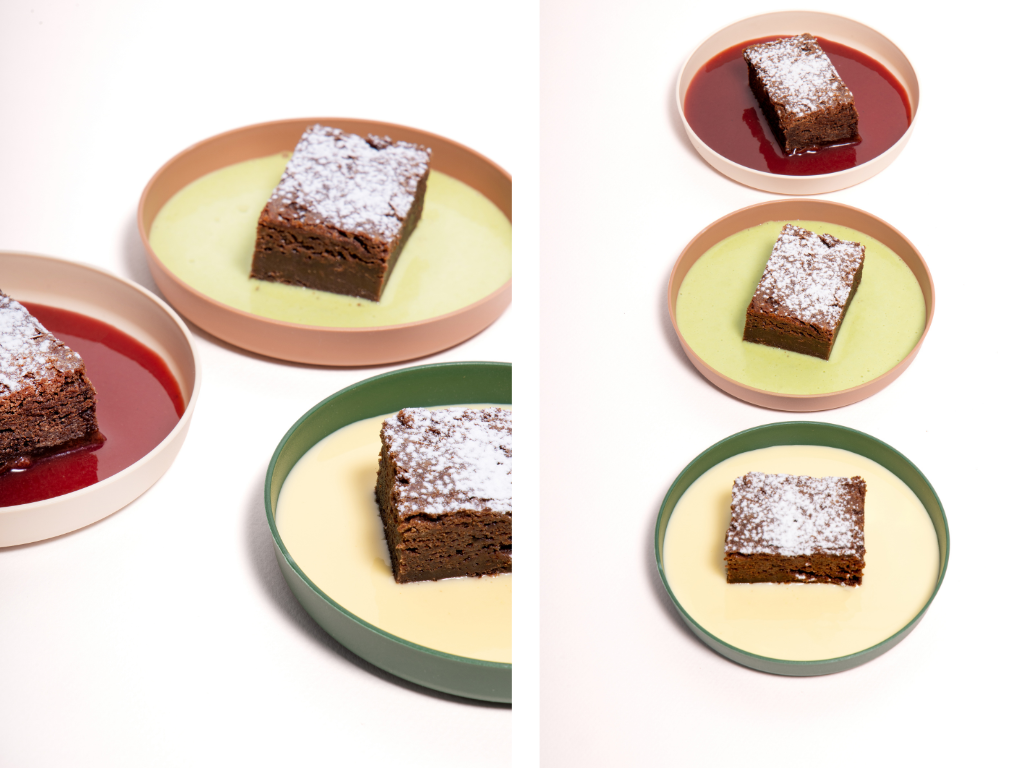
WOODBOX 2.7L TO SHARE

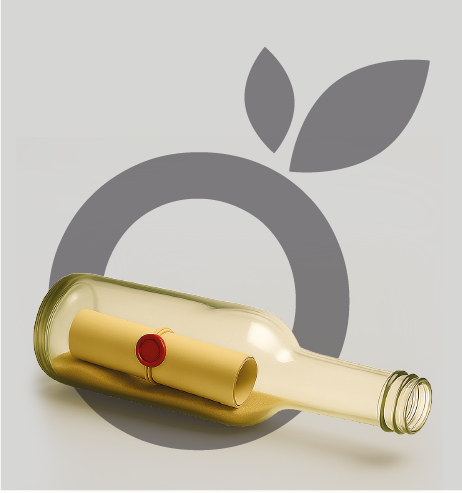
Examples of reusable products:

What is recyclable packaging?

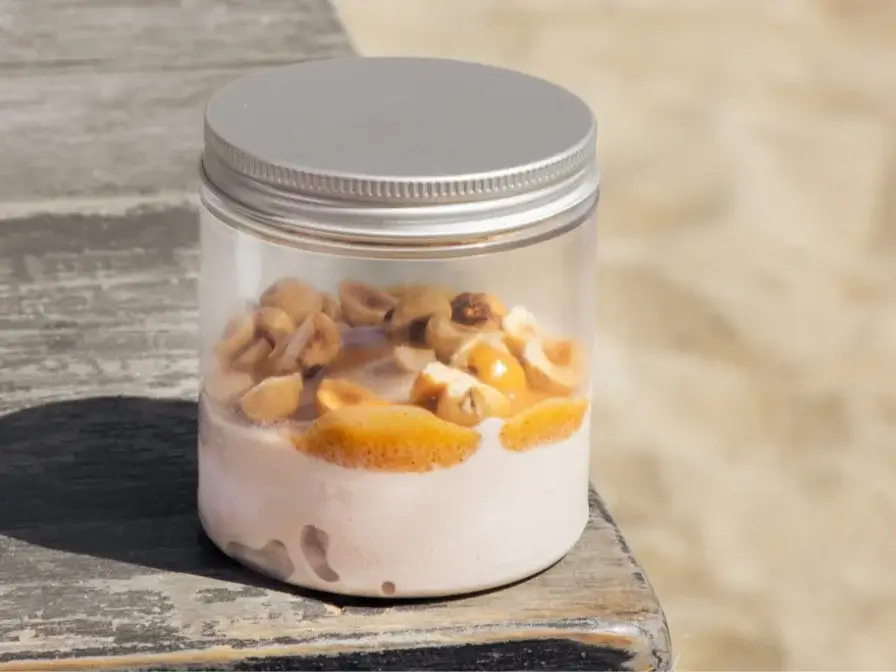
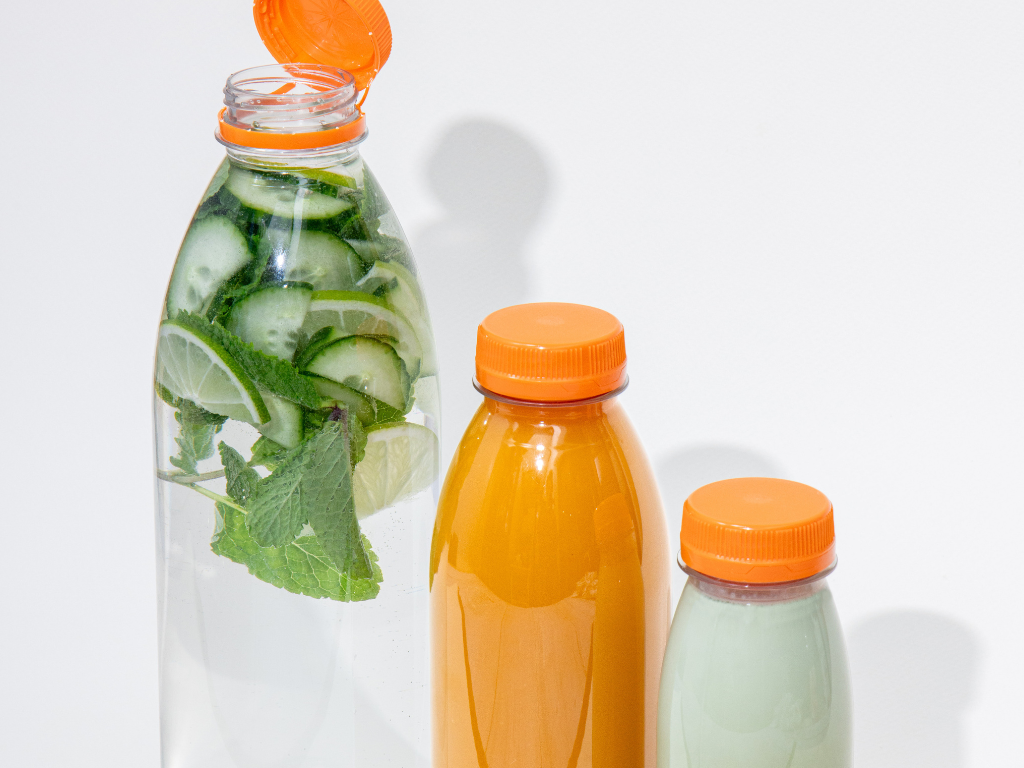
JUICE BOTTLES + CAP

A recyclable package is one whose materials can be collected, sorted and transformed into new raw materials after use. Cardboard, glass, certain plastics (PET, HDPE), aluminium and steel are the most commonly recycled materials.

However, be careful: recyclable does not mean recycled. For packaging to be effectively recycled, it must be:

  • Correctly sorted by the consumer.
  • Collected by an operational sorting system.
  • Made of materials compatible with existing recycling technologies.
  • Free from contamination (food residues, inseparable material blends).

According to Eurostat data, only around 35% of plastic packaging placed on the EU market was effectively recycled in recent years. This figure illustrates the considerable gap between the promise of "recyclable" and reality on the ground.

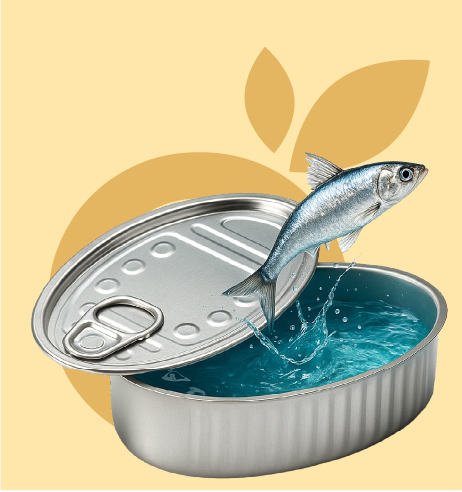
Examples of recyclable products:

Life cycle analysis: what is the real impact?

The carbon footprint of each model

To objectively compare reusable and recyclable packaging, you need to think in terms of life cycle analysis (LCA). This methodology takes into account raw material extraction, manufacturing, transport, use, end of life and, in the case of reusables, washing cycles.

A study by Zero Waste Europe demonstrated that a reusable glass container becomes more advantageous than a recyclable disposable plastic container from the 5th cycle of use in terms of CO₂ emissions. For a reusable polypropylene cup, the environmental break-even point is between 7 and 15 uses depending on the study.

The key factor is therefore the number of effective rotations. A reusable container that is only used two or three times before being discarded would have a carbon footprint worse than its recyclable disposable equivalent.

The water and energy question

Reuse is not neutral. Industrial washing of containers requires hot water, detergents and energy. In regions subject to water stress, this consumption can tip the scales.

However, washing technologies have progressed considerably. Modern washing stations recover and filter up to 90% of the water used. They increasingly run on renewable energy, significantly reducing their footprint.

On the recycling side, material transformation is also energy-intensive. Melting recycled aluminium uses 95% less energy than producing primary aluminium, but recycling plastic remains a complex and energy-costly process, with progressive degradation of material quality (known as downcycling).

Residual pollution

Recycling generates residues. Flexible plastics, multi-layer packaging and small formats still largely escape sorting systems. They end up incinerated or in landfill, contributing to soil and air pollution.

Reuse, when well managed, simply eliminates this waste production. That is its major strength: the best waste is waste that is never produced.

Reusable and recyclable in sustainable catering

The European and national regulatory context

European regulation is moving decisively towards reuse. The PPWR directive establishes binding reuse targets for food and drink packaging. In France, the AGEC law (Anti-Waste for a Circular Economy) has been a pioneer since 2020, requiring fast-food restaurants with more than 20 seats to use reusable tableware for dine-in meals since January 2023.

In 2025-2026, this momentum is accelerating across the EU. Targets to reduce single-use plastic packaging are becoming increasingly stringent, pushing the entire food service sector towards change. The UK, despite post-Brexit regulatory divergence, is also tightening its Extended Producer Responsibility (EPR) framework for packaging.

The benefits of reusable in catering

Catering professionals who adopt reuse report several advantages:

  • Significant reduction in waste volume: some establishments report a 70-80% decrease in their waste bins after switching to reusables.
  • Improved brand image: consumers, especially 18-35 year olds, favour committed brands. Recent surveys show that over 70% of European consumers prefer restaurants offering reusable tableware.
  • Cost control in the medium term: despite the initial investment, the recurring purchase of disposable tableware represents a significant expense. Reusables typically pay for themselves within 12 to 18 months.
  • Regulatory compliance: anticipating legal requirements avoids penalties and positions the business as a responsible player.

Limitations and challenges to overcome

Despite its advantages, the reusable model in catering faces concrete obstacles:

Collection and washing logistics is the first barrier. For restaurants delivering to homes, recovering containers after use requires specific organisation: financial deposit, return points, partnerships with washing service providers.

The initial investment can deter small establishments. A reusable container costs 10 to 30 times more than a disposable tray. Public subsidies and pooling arrangements between restaurateurs are beginning to emerge to remove this barrier.

Finally, changing consumer behaviour takes time. Returning a container requires effort, even if minimal. Digital deposit systems and mobile apps are facilitating this transition, but the habit still needs to be built.

What about recyclable?

Recyclable packaging retains its full relevance in certain catering scenarios:

  • Occasional takeaway where return logistics are impossible (festivals, itinerant food trucks).
  • Protective packaging for perishable goods requiring specific barrier properties (protective atmosphere, absolute seal).
  • Geographical areas where no washing infrastructure is available nearby.

The ideal approach is to combine both: reusable as a priority wherever possible, and optimised recyclable (mono-material, no toxic inks, easily separable) when reuse is not feasible. This is the principle of the EU waste hierarchy: prevent first, reuse next, recycle as a last resort.

Our commitment: lessons from our CSR report

A concrete and measurable approach

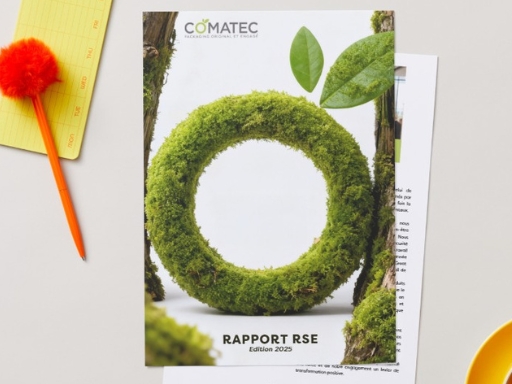
At Comatec, we don't just talk about sustainability: we measure it, document it and share it. Our 2025 CSR report details all our actions in favour of a more circular and responsible economy.

This report highlights several areas of work directly linked to the reusable versus recyclable question:

  • Analysis of our environmental footprint, including the management of our packaging and consumables.
  • Quantified waste reduction targets.
  • Partnerships established with suppliers committed to eco-design.
  • Training delivered to our teams to integrate best practices into daily operations.

Why publish a CSR report?

Publishing a CSR report is not just an obligation for large companies. It is a tool for transparency, management and differentiation. It enables you to:

Give visibility to actions taken and results achieved. Identify areas for improvement. Strengthen the trust of customers, partners and employees. Commit to a dynamic of continuous improvement.

We invite you to consult our full 2025 CSR report to discover our commitments and performance indicators in detail.

How to choose between reusable and recyclable?

A hybrid and pragmatic approach

 The most relevant answer is rarely 100% reusable or 100% recyclable. The most advanced businesses adopt a hybrid strategy:

They maximise reuse wherever conditions allow. They optimise the recyclability of packaging that remains single-use (removal of sorting disruptors, switch to mono-material, weight reduction). They raise awareness among their teams and customers to improve return and sorting rates.

This approach fits perfectly within the European waste hierarchy: prevention > reuse > recycling > energy recovery > disposal.

Common mistakes to avoid

Here are the most common pitfalls:

Confusing "recyclable" with "recycled": a logo on the packaging does not guarantee it will actually be recycled.

Neglecting reuse logistics: adopting reusables without having planned collection, washing and redistribution means setting yourself up for rapid failure.

Underestimating behaviour change: the transition requires communication, education and sometimes financial incentives (deposits).

Opposing the two models instead of combining them: reusable and recyclable are not enemies. They are complementary in an overall strategy to reduce environmental impact.

Ignoring eco-design: even recyclable packaging can be improved by reducing its mass, removing problematic inks and adhesives, and simplifying its structure.

Trends to watch in 2026

The rise of deposit return schemes

The return of the deposit is one of the most striking trends of recent years. Several European countries Germany, the Netherlands, Scandinavian countries already have high-performing systems with return rates exceeding 90%.

Across Europe, debates on implementing national deposit return schemes (DRS) for PET plastic bottles and cans are advancing. The UK introduced its own DRS legislation, with Scotland leading the way. Meanwhile, local reuse deposit initiatives for glass bottles and food containers are multiplying. Start-ups and social enterprises are developing innovative logistical solutions to industrialise the washing and tracking of containers.

The rise of innovative materials

The return of the deposit is one of the most striking trends of recent years. Several European countries Germany, the Netherlands, Scandinavian countries already have high-performing systems with return rates exceeding 90%.

Across Europe, debates on implementing national deposit return schemes (DRS) for PET plastic bottles and cans are advancing. The UK introduced its own DRS legislation, with Scotland leading the way. Meanwhile, local reuse deposit initiatives for glass bottles and food containers are multiplying. Start-ups and social enterprises are developing innovative logistical solutions to industrialise the washing and tracking of containers.

Key takeaways

The debate between reusable and recyclable should not be seen as an opposition, but as a complementarity. The priority, dictated by both common sense and European regulation, is clear: reduce first, reuse next, recycle as a last resort.

Reusable offers the greatest potential for reducing environmental impact, provided it is supported by efficient logistics and a high rotation rate. Recyclable remains essential where reuse is not yet possible, provided its design is optimised and sorting streams are strengthened.

In sustainable catering, the transition is well underway. Legal obligations, consumer expectations and economic benefits are converging to accelerate the adoption of reuse.

Where do you stand in your journey? Whether you are a restaurateur, a procurement manager, a local authority or simply an engaged citizen, every action counts. Start by assessing your situation, identify the packaging you can reuse, and optimise the recyclability of the rest. For inspiration, don't hesitate to read our 2025 CSR report: it is proof that a structured, transparent and measurable approach is within reach of every organisation.

FAQ

Is reusable always better for the environment than recyclable?

Not always. The environmental benefit of reusables depends on the number of use cycles. Below a certain threshold (typically 5 to 15 uses depending on the material), disposable recyclable packaging can have an equivalent or even better carbon footprint. The key is that the reuse system is well organised to ensure maximum rotations.

Which materials are most easily recyclable?

Glass, aluminium and steel are infinitely recyclable without loss of quality. Cardboard and paper recycle very well (5 to 7 cycles on average). PET and HDPE plastics have mature recycling streams, while flexible plastics, multi-layer films and polystyrene remain difficult to recycle.

Does the law require restaurants to use reusable tableware?

Across the EU, regulation is moving in that direction. In France, since 1 January 2023, the AGEC law requires fast-food establishments with more than 20 seats to serve dine-in meals with reusable tableware. Similar frameworks are being developed in other EU member states and the UK as part of the broader push towards circular economy targets.

Can you combine reusable and recyclable in the same strategy?

Absolutely, and it is in fact the recommended approach. The most effective strategy is to prioritise reusables wherever logistics allow, and optimise the recyclability of packaging that remains single-use. This hybrid strategy aligns with the European waste hierarchy.