

End of plastic straws: what alternatives are available today for the food service industry?

Since 1 January 2021, the ban on plastic straws has become a reality for all catering professionals in France. The Anti-Waste Law for a Circular Economy (AGEC Law) has banned these small disposable tubes symbols of plastic pollution alongside other single-use plastic products such as cutlery, stirrers and cotton buds. Five years on, the market has changed significantly, new regulatory issues have arisen particularly regarding PFAS and catering businesses must, now more than ever, make informed choices.
This article provides an update on the legislation, reviews the alternatives to plastic straws available in 2026, analyses the limitations of certain solutions and helps you choose the best option for your type of establishment.
In summary:
- Single-use plastic straws have been banned in France since 2021 (the AGEC Act), with an exception still in place for medical use and for people who need them
- There are two approaches to alternatives: reusable straws (stainless steel, glass, silicone) for on-premises service, and disposable straws (paper, cardboard, wheat) for takeaway and delivery
- Each material behaves differently depending on the drink: paper straws do not hold up well in hot or acidic drinks, whereas stainless steel is suitable for everything
- The right decision is based on the actual cost purchase, washing, waste management not on the unit price
- The real question remains whether a straw is still necessary: no longer serving them by default reduces consumption without any investment, whilst still making them available on request.
What the law prohibited in 2021, and what it has never prohibited
Before discussing alternatives, it is essential to understand the specific regulatory framework. There is still frequent confusion amongst professionals as to what is actually prohibited and what is merely a recommendation.
The timetable for the regulatory legislation: straws, stirrers and lids
When you’re ordering your consumables for the season, one question keeps cropping up: which straws can you still use, and which ones have disappeared from the market? Between successive bans and the arrival of new materials, it’s not always easy to keep track.
Three major laws have brought about significant changes in packaging and food service practices in both the public and private catering sectors:
The Egalim I, II and III laws (laws aimed at balancing commercial relations in the agricultural and food sectors and promoting healthy, sustainable and accessible food), enacted respectively on October 30, 2018, October 19, 2021, and March 30, 2023. They regulate commercial relationships between farmers, manufacturers, distributors and the collective catering sector.
The AGEC Law, enacted on February 10, 2020, aims to transform production and consumption systems towards a more circular economy.
The Climate and Resilience Law, enacted on August 22, 2021, is structured around five key areas aimed at reducing environmental impacts: consuming, producing, travelling, housing and eating.
These laws complement and further specify one another. Among other measures, they establish a phased timetable for banning single-use plastic products.
Key milestones:
- January 1, 2020: ban on plastic cotton buds, as well as single-use plastic cups and plates.
- January 1, 2021: ban on plastic straws, stirrers, disposable cutlery, expanded polystyrene containers, steak picks, and lids for takeaway cups.
- January 1, 2022: requirement for plastic-free packaging for unprocessed fruit and vegetables weighing less than 1.5 kg; end of the placing on the market of plastic tea bags. Mandatory collection and reuse for home meal delivery services (delivery of at least 4 meals per week), covering cups, lids, plates and containers.
- January 1, 2023: mandatory use of reusable tableware for dine-in food service establishments with more than 20 seats.
- By the end of 2025: target of reducing single-use plastic packaging placed on the market by 20% compared with 2018. Collective catering services offering takeaway sales must give consumers the option of being served in a reusable container or a container made from recyclable materials.
- Ban on plastic food containers used for cooking, reheating and serving in schools and higher education institutions, as well as in pediatric, obstetric and maternity departments. For local authorities with more than 2,000 inhabitants, this requirement applies from 2028.
- The European SUP (Single-Use Plastics) Directive, adopted by the European Parliament in 2019 and transposed into national law by the Member States, also provides a framework for these restrictions at EU level. France has often adopted more ambitious measures than the minimum requirements set at European level.
The alternatives that have replaced plastic
The market for alternatives to plastic straws has grown rapidly since 2020. Restaurants, bars, caterers and fast-food chains have had to adapt, sometimes urgently. Here is a comprehensive overview of the solutions available in 2026.
Paper and cardboard: the most common alternative
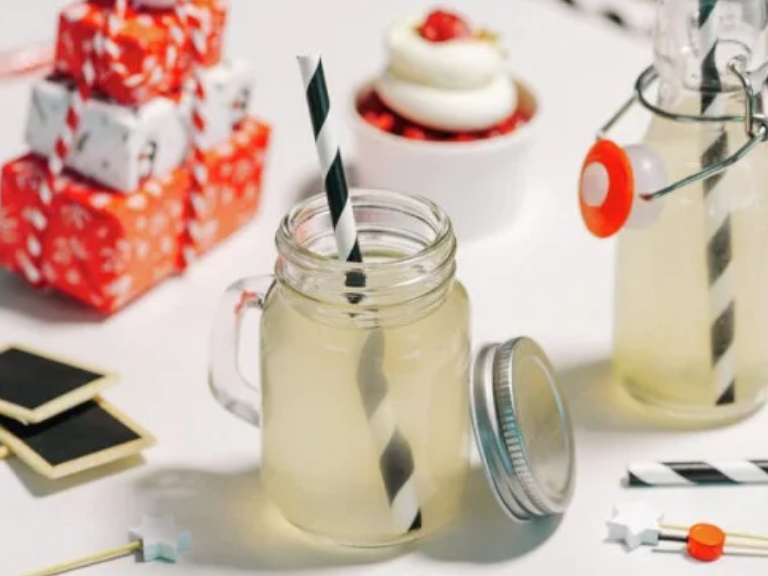
Paper straws have become the most widely used alternative. Their main advantage is their low unit cost and immediate availability.
However, they have limitations that are well known to professionals:
They soften quickly on contact with liquid, particularly in hot or acidic drinks.
They can alter the taste of the drink.
They rarely last longer than 30 to 45 minutes in a cocktail or smoothie.
Despite these drawbacks, paper straws remain the most widely used solution in fast food and takeaway outlets thanks to their affordability.
Stainless steel, glass and silicone: reusable alternatives
For dine-in food service, reusable straws are the most sustainable solution and the one most aligned with the spirit of the AGEC Law.
Three main materials are available:
- Stainless steel: highly durable, easy to clean (using a cleaning brush), and suitable for all types of beverages. Offers an almost unlimited lifespan.
- Borosilicate glass: elegant and transparent, ideal for cocktails and showcasing beverages. More fragile, making it particularly suitable for high-end establishments.
- Food-grade silicone: flexible, suitable for children, and heat-resistant. Easy for individuals to carry and transport.
The initial cost is higher, but the return on investment can be achieved within just a few weeks for a bar or restaurant with high customer turnover.
Explore our range of reusable straws to find the solution best suited to your establishment.
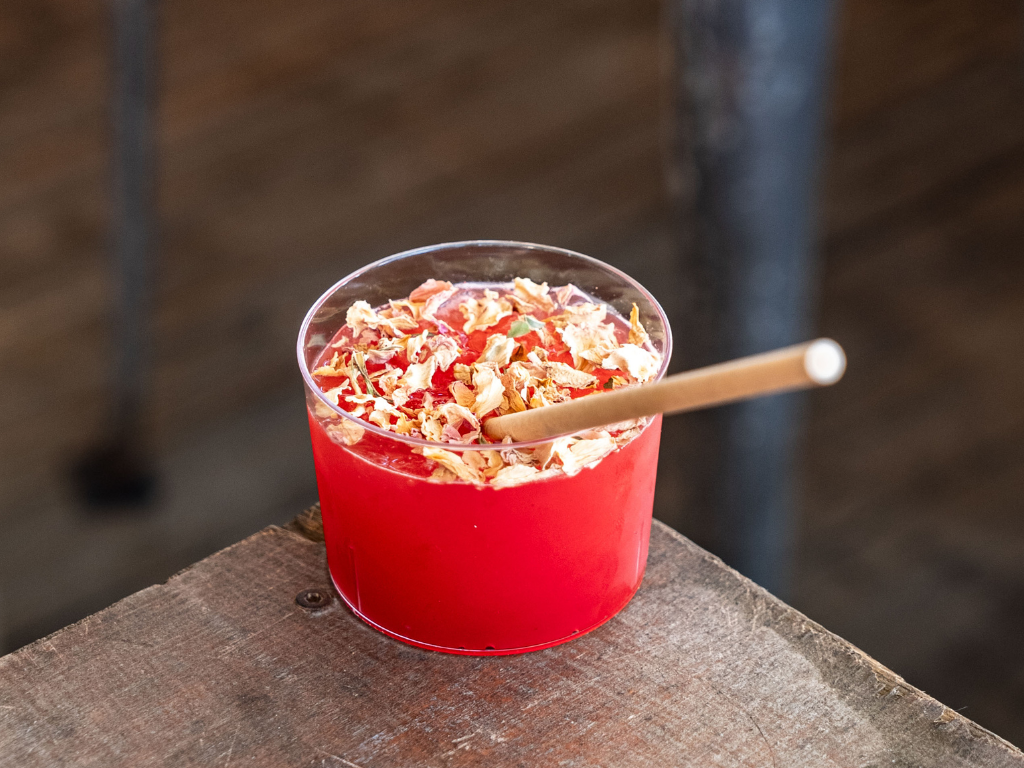
Bamboo, wheat and edible straws
Other alternatives to plastic straws focus on natural or edible materials:
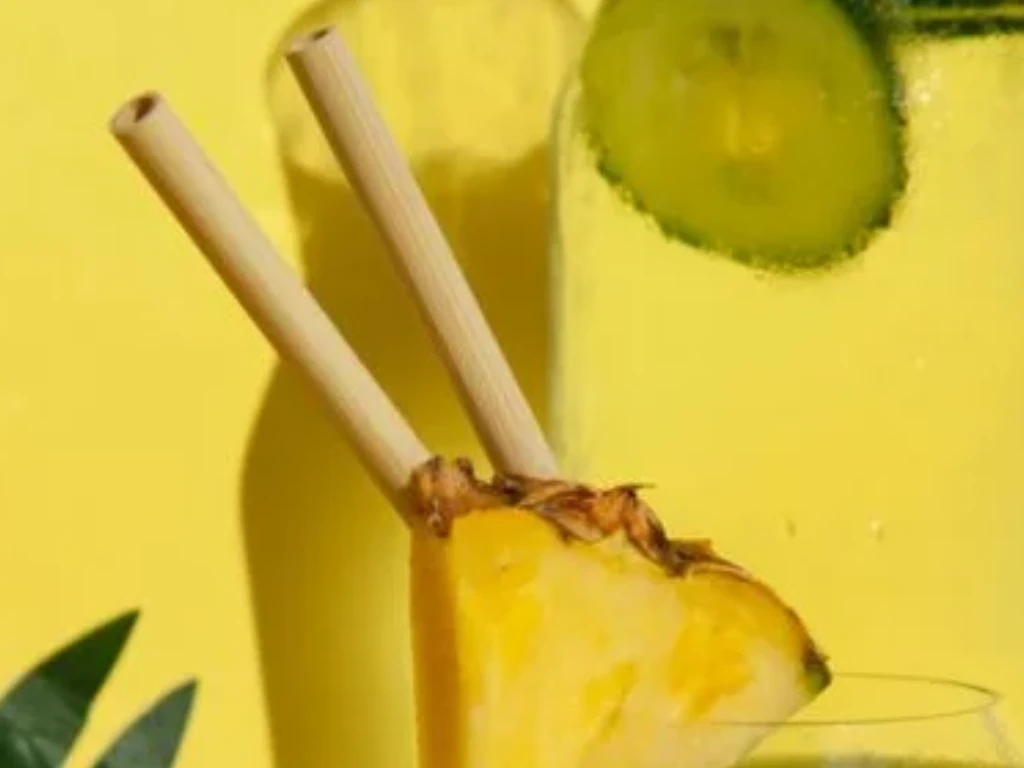
Bamboo: natural, sturdy and reusable several times. However, attention should be paid to its origin, particularly the carbon footprint associated with transportation from Asia, as well as any treatments it may undergo.
Wheat or rye: 100% natural, with no chemical processing. Its rigidity makes it well suited to cold beverages. It softens more quickly when used with hot drinks.
Edible straws (pasta, sugar, seaweed): guaranteed “wow” factor in food service, with zero waste since customers can eat the straw. Its durability varies depending on its composition.
These solutions appeal to customers who are environmentally conscious and looking for something original, but their cost remains higher than that of paper straws.

How each ingredient affects hot, acidic and iced drinks
Choosing the right straw depends entirely on the type of drinks you serve. Here is a comparison table to help you.
Exceptions on medical and health grounds
The ban on plastic straws has one notable exception: medical uses. Single-use plastic straws remain permitted in healthcare facilities and for people with disabilities who need them to eat or drink.
Material | Suitable beverages | Duration | Reusable |
Paper | Cold drinks, juices | 30 - 45 min | No |
Reinforced cardboard | Cold and lukewarm drinks | 1-2 h | No |
Stainless steel | All beverages | Unlimited | Yes |
Glass | Cocktails, cold drinks | Unlimited | Yes |
Silicone | All beverages, children | Unlimited | Yes |
Bamboo | Cold and lukewarm drinks | Several uses | Yes |
Wheat/rye | Cold drinks | 45m - 1 h | No |
Edible | Cold drinks, cocktails | 20- 40 min | No |
Choosing your alternative based on your establishment
There is no one-size-fits-all solution. The best choice depends on your service type, volume and market positioning.
On-site dining: reusable becomes the default option
Consistency dictates that restaurants and bars adopt stainless steel or glass straws for table service. The investment pays off quickly: a stainless steel straw at €2 used 500 times costs €0.004 per use 3 to 7 times cheaper than a disposable paper straw.
Takeaway and delivery: the constraints of single-use
For takeaway sales, reusable packaging presents obvious logistical challenges (deposits, returns, cleaning). PFAS-free paper straws, made from wheat or food-grade pulp, remain the most realistic options.
Discover our takeaway packaging solutions tailored to these constraints.
Events and high volumes
Festivals, trade fairs and sporting events generate huge volumes of waste. Against this backdrop, two strategies are emerging:
- Responsible single-use products: wheat or paper straws, which are biodegradable and compostable.
- Reusable items with a deposit: an increasing number of festivals are adopting deposit schemes for cups and accessories. Reusable straws with a deposit are beginning to appear in this sector.
In both cases, waste management at the end of the event must be planned in advance: either through a composting scheme or a collection and washing system.
Compare the real cost, not the unit price
A common mistake is to compare only the purchase price. The actual cost includes:
- The unit price of the straw.
- The replacement frequency (disposable vs reusable).
- The washing costs (water, energy, labour) for reusable straws.
- The cost of waste management (collection charges, sorting).
- The impact on brand image and customer satisfaction.
When all these factors are taken into account, reusable straws are often more cost-effective after just three months’ use for an establishment serving more than 50 drinks a day. To explore this topic further, read our article ‘Reusable or recyclable: which is better?’.
The question few establishments ask: is a straw still necessary?
Beyond the choice of material, a deeper question arises: is straw really essential?
Stop serving straws by default offer them on request
Numerous restaurant chains McDonald's, Starbucks, Five Guys have adopted the "straw on request" principle. The result is striking: in most cases, straw consumption drops by 40 to 70% simply by no longer distributing them automatically.
This simple gesture reduces purchasing costs, decreases waste volume and sends a positive signal to environmentally conscious customers. It is probably the most effective and easiest measure to implement.
Sippy lids and cups that don't need straws
Innovative packaging offers solutions that make straws unnecessary:
- Lids with spouts: widely used in coffee shops, they allow you to drink without a straw. Some models are now made from compostable materials.
- Glasses with an ergonomic rim: manufacturers offer glasses designed to make it easier to drink directly from them, including smoothies and milkshakes.
Explore our drinks range to discover these innovative solutions.
Accessibility: why total elimination is not the right answer
Eliminating straws entirely would be a mistake. For people with disabilities, the elderly or those with certain medical conditions, the straw remains an indispensable tool for independence. Disability rights organisations regularly remind us that accessibility must take precedence over a "zero straw" approach.
The right approach: stop imposing the straw, but always make it available for those who need it, ideally in a reusable or health-and-environment-compliant version.
The end of plastic straws is not merely a regulatory requirement: it is an opportunity to rethink your offering, reduce your costs and strengthen your commitment to the environment. Whether you opt for reusable straws, responsible single-use alternatives or a smart way to do away with straws altogether, the key is to make an informed choice and stick to it.
FAQ
Which single-use plastic products have been banned in France since 2021?
Since July 3, 2021, the SUP directive bans plastic straws, stirrers, disposable cutlery, plates, cotton buds, expanded polystyrene containers and balloon sticks across the EU. Exceptions exist for medical use.
What are the best alternatives to plastic straws for the food service industry?
The main alternatives are paper straws (PFAS-free), stainless steel, glass, silicone, bamboo, wheat and edible straws. Reusable options are ideal for on-site dining, while paper or wheat suit takeaway. The best practice is to offer straws on request only.
Why do paper straws contain PFAS and what will change in 2026?
Paper straws often use a PFAS-based coating to resist moisture. A 2023 study found that 90% of tested paper straws contained these substances. European regulation 2024/3013, effective August 12, 2026, sets strict PFAS thresholds for food contact materials.
Can straws be completely eliminated in a restaurant?
No, total elimination is not advisable. While not serving straws by default reduces consumption by 40-70%, it is essential to keep them available for people with disabilities or specific needs. The most responsible approach is to offer them on request.
The end of plastic straws is not just a regulatory constraint: it's an opportunity to rethink your offering, reduce costs and strengthen your environmental commitment. With the PFAS deadline of August 12, 2026, now is the time to verify your supply chain, question your suppliers and choose alternatives that protect your customers, your budget and the planet. Whether you opt for reusable, responsible disposable or the smart elimination of straws, the key is to make an informed choice and stick with it.