Cardboard, bamboo or palm leaf plates: which eco-friendly disposable tableware should you choose?

Categories : Blog

Paper, bamboo or palm-fibre plates: which eco-friendly disposable tableware should you choose?

With the growing wave of regulations phasing out single-use plastic across Europe, food service professionals, caterers and event planners all face the same question: which eco-friendly disposable tableware should you choose among the wide range of natural materials now available? Kraft cardboard, bagasse, bamboo, palm leaf, poplar wood… Biodegradable and compostable alternatives are multiplying, but they are far from equal in terms of performance, cost and environmental impact.

In summary:

  • Coated kraft paperboard: the most versatile option for takeaway and delivery, at a controlled cost
  • Bagasse (sugar cane fibre): good heat retention, suitable for dishes that go in the oven or microwave
  • Bamboo and palm leaf: a premium look for events and catering, but made from imported materials
  • French poplar wood: locally sourced with a reduced transport footprint, and traceability provided on a product-by-product basis

The right choice depends on your actual use, your logistical constraints and your procurement policy.

What the regulations allow depending on the use

Before comparing materials, it is essential to know where you are still allowed to use disposable tableware. European and national regulations have changed significantly in recent years.

Reusable tableware now mandatory for dine-in service

Since the implementation of EU directives on single-use plastics  and in France, the AGEC law  reusable tableware is required for on-premises consumption in establishments above a certain size: plates, cups, cutlery and containers for both hot and cold beverages. The question of disposables no longer applies to table service.

If this applies to your business, look into a range of reusable containers that comply with current legislation. Disposable tableware remains fully relevant, however, in several other contexts.

Uses where disposable is still permitted

Eco-friendly disposable tableware retains its full relevance in a number of situations:

  • Takeaway: sandwich shops, bakeries, food trucks.
  • Delivery: meal trays, lunch formulas, dark kitchens.
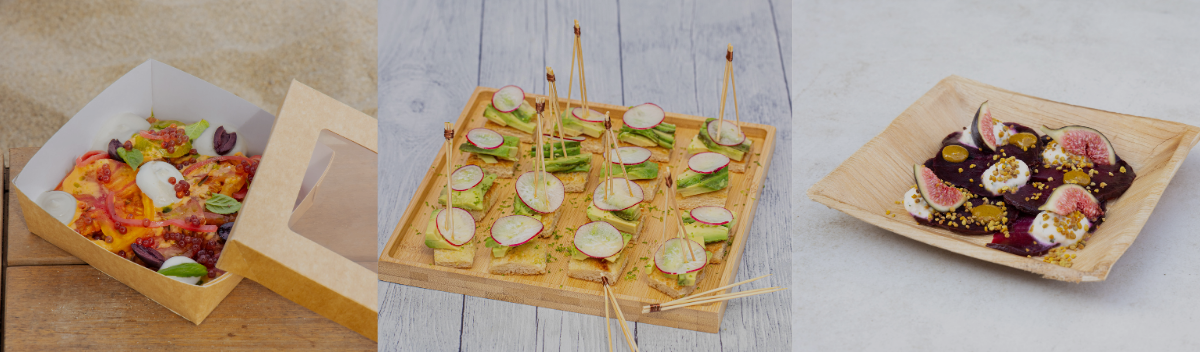
  • Events: weddings, festivals, seminars, outdoor catering.
  • Catering: buffets, cocktails, private receptions.

In each of these cases, the choice of material has a direct impact on perceived quality, hot and cold food preservation, and of course the ecological footprint of your business.

Comparing biodegradable disposable tableware materials

Here are the five main families of natural materials you will encounter on the market in 2026. Each has its strengths and limitations.

Kraft cardboard

Cardboard kraft remains the most widely used material in bio disposable tableware. Its natural brown appearance immediately conveys an eco-friendly approach. Thanks to an inner film (usually PLA or an aqueous coating), it becomes waterproof and can handle sauces, juicy dishes and even some hot beverages.

  • Compatible with oven and microwave (depending on coating).
  • Wide range of formats: plates, bowls, boxes, cups.
  • Controlled cost, ideal for high volumes.
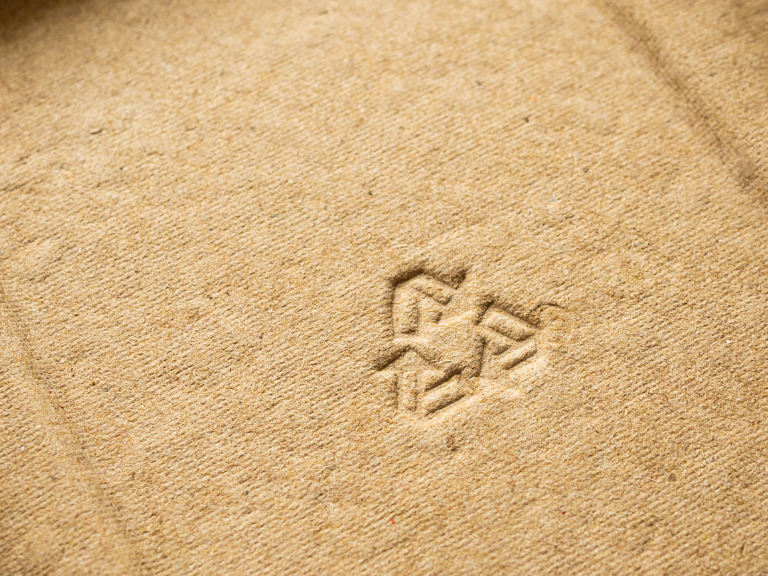
  • Recyclable if the film is compostable or separable.

This is the broadest compromise: it suits most takeaway and delivery uses without blowing the budget.

Bagasse

Bagasse or sugarcane fibre is a fibrous residue from sugarcane crushing. Transformed into biodegradable disposable tableware, it offers a white, clean and rigid finish reminiscent of disposable porcelain.

  • Heat resistance up to 200 °C in the oven.
  • Compatible with microwave and freezing (down to -18 °C).
  • Resistant to grease and moisture.
  • Industrially compostable in 45 to 90 days.

However, bagasse does not withstand blast freezing or pasteurisation. Always check the temperature limits stated on the technical data sheet.

Bamboo

Bamboo appeals through its quality appearance and robustness. Disposable plates and biodegradable cutlery made from bamboo project a premium image, highly valued at events and high-end catering.

  • Strong, good grip.
  • Compatible with oven and microwave.
  • Naturally antibacterial material.
  • Biodegradable under natural conditions.

The point to address honestly: origin. Bamboo grows primarily in Southeast Asia. Shipping it by cargo across thousands of kilometres adds to its carbon footprint. If provenance is a decisive criterion for your CSR policy, compare it with local alternatives.

Palm leaf

Plates made from palm leaf (areca leaf) are produced from leaf sheaths that have fallen naturally. No trees are cut down, and processing is done solely through hot pressing, without glue or chemical additives.

  • Highly distinctive finish: each piece is different, with unique veins and shades.
  • Naturally waterproof, with no coating required.
  • Compatible with oven (up to 200 °C) and microwave.
  • 100 % compostable and biodegradable.

This is a premium choice, typically more expensive per batch, but it creates a "wow" effect on a buffet or event table.

Poplar wood

Poplar is grown in Europe, particularly in France. Plates and trays made from poplar wood benefit from a short supply chain  a powerful argument for reducing the transport footprint.

  • European manufacture, enhanced traceability.
  • Inner food-grade film for waterproofing.
  • Heat resistance up to 200 °C in the oven.
  • Warm, artisanal appearance.

This is the ideal material for professionals who want to combine eco-friendly disposable tableware with local sourcing.

Comparative table of materials

MaterialHeat resistanceWaterproofingOven & microwaveAppearanceTypical use
Kraft cardboardGoodWith coatingYes (depending on film)Natural, brownTakeaway, delivery
BagasseVery good (200 °C)YesYesWhite, cleanHot dishes, catering
BambooGoodMediumYesPremium, exoticHigh-end events
Palm leafVery good (200 °C)NaturalYesUnique, veinedBuffets, receptions
Poplar woodVery good (200 °C)With food-grade filmYesArtisanal, warmCatering, short supply chain

Measuring the environmental impact of each material

Displaying the label "biodegradable" or "compostable" on packaging is not enough to guarantee a reduced impact on the environment. Three concepts need to be clarified.

Biodegradable, compostable, recyclable: three different promises

  • Biodegradable: the material breaks down through the action of living organisms, but with no specified timeframe or conditions, the term remains vague.
  • Compostable: the material breaks down into compost within a standardised timeframe (EN 13432), typically in industrial composting at 58 °C. Very few items are truly compostable in a home compost bin.
  • Recyclable: the material can be reintroduced into a production cycle, provided a local sorting facility exists.

In practice, a PLA cup is industrially compostable, but it will neither be recycled in the paper stream nor composted in a garden bin. Always check the actual end-of-life instructions, not just the logo.

The origin and transport of the material

A biodegradable bamboo product manufactured in Asia and shipped by cargo for 10,000 km does not have the same carbon footprint as European poplar transported 300 km. Regardless of the "eco-friendly" label, maritime transport accounts for an average of 15–20 % of the total carbon footprint of a disposable tableware product (source: ADEME, Impacts® database, 2024).

For a coherent approach, always cross-reference three data points: the material, the sourcing distance and the mode of transport.

What a product-by-product environmental score reveals

Tools like PlanetScore© now make it possible to assess a product's impact on climate, biodiversity, pesticides and animal welfare. In 2026, more and more distributors display this type of score on their product pages.

To delve deeper into the end-of-life question, read our detailed analysis: reusable or recyclable — what should you prioritise? And to understand how we integrate these challenges into our own operations, see our CSR report.

Choose your eco-friendly disposable tableware based on your actual use

The best material is the one that matches your real-world situation. Here are practical recommendations by context of use.

For takeaway and delivery

The key constraints are unit cost, transport resilience (stacking, scooter vibrations), sauce-proofing and microwave compatibility for reheating at the customer's end.

  • Top choice: kraft cardboard with PLA or aqueous coating – excellent quality-price-ecology ratio.
  • Alternative: bagasse for dishes requiring an oven pass.

Browse our takeaway range to find the right format for your recipes.

For events and catering

Here, aesthetics matter as much as functionality. Your guests eat standing up, often without a table. You need a rigid plate that feels good in the hand and showcases the presentation.

  • Top choice: palm leaf or bamboo – high-end finish, "nature chic" effect.
  • Alternative: poplar wood for a local-sourcing, terroir positioning.

Discover our dedicated selection in the events range.

For meal trays and set menus

Meal trays require a compartmentalised container, compatible with both cold and hot food, that supports film wrapping and refrigerated transport.

  • Top choice: compartmentalised bagasse with a clear PLA lid.
  • Alternative: kraft cardboard with an inner divider.

Check out our meal tray solutions to build your set menus.

What to check before ordering your bio disposable tableware

Too many professionals order at the lowest price without verifying product compliance. Here are the reflexes to adopt.

Documents to request

  • Full technical data sheet: dimensions, weight, exact material, coating.
  • Food contact compliance certificate (EU Regulation No 1935/2004).
  • Operating temperatures: min. and max. supported (freezing, oven, microwave).
  • Compostability certificate: EN 13432 standard or OK Compost.

A supplier who does not publish these documents directly on their product pages should raise a red flag. With a serious professional, this information is accessible before purchase, not after a complaint.

Test with your own dishes

No technical data sheet can replace a real-world test. A cardboard plate that holds up perfectly with a salad may buckle under a curry. A bagasse tray that is flawless at 150 °C may release an odour when vacuum-sealed at 200 °C.

Best practice: always order samples, test with your most critical recipes (the fattiest, the hottest, the most liquid), and validate under real delivery conditions. Don't hesitate to request your samples before placing a bulk order.

The market for eco-friendly disposable tableware is evolving rapidly. New materials, new standards, new consumer expectations: every year brings its own set of advances. The key is never to make a choice based solely on a green logo or a discount price. Cross-check the technical data, assess the actual impact and test the products under real-world conditions. That is how you will make an informed choice that is good for your customers, your reputation and the planet.

FAQ

What is the best material for eco-friendly disposable tableware? ​

There is no one-size-fits-all material. Kraft paper offers the best balance of versatility and value for takeaway food. Bagasse is ideal for hot dishes cooked in the oven. Bamboo and palm leaf are the go-to choices for high-end events. French poplar wood is ideal for minimising the transport footprint. The best choice depends on your intended use, the dishes you serve and your environmental commitments.

What is the difference between biodegradable, compostable and recyclable?

Biodegradable means that the material breaks down naturally, although there is no guaranteed timeframe. Compostable refers to standardised decomposition (EN 13432) in industrial composting. Recyclable means that the material can be reintroduced into a production cycle, provided that a local recycling scheme exists. Always check the actual end-of-life conditions before communicating with your customers.

Is disposable tableware still permitted in the catering industry?

Since the AGEC Act came into force, reusable tableware has been compulsory for on-premises service in establishments with a capacity of more than 20 covers. However, disposable tableware remains fully permitted for takeaway, delivery, events and off-premises catering services.

How can you check the quality of biodegradable disposable tableware before placing an order?

Always ask for the technical data sheet, the certificate of compliance for food contact and the operating temperatures. Insist on an EN 13432 compostability certificate if the product is marketed as compostable. Finally, always test samples on your own tableware before placing a bulk order.

Is bamboo really an eco-friendly option for disposable tableware?

Bamboo is a fast-growing, renewable resource that is naturally antibacterial and biodegradable. However, it is mainly grown in Asia, which means it has to be transported over long distances. Its overall carbon footprint is therefore higher than that of a locally produced material, such as French poplar wood. It remains an excellent aesthetic choice, but its origin must be taken into account in your environmental assessment.