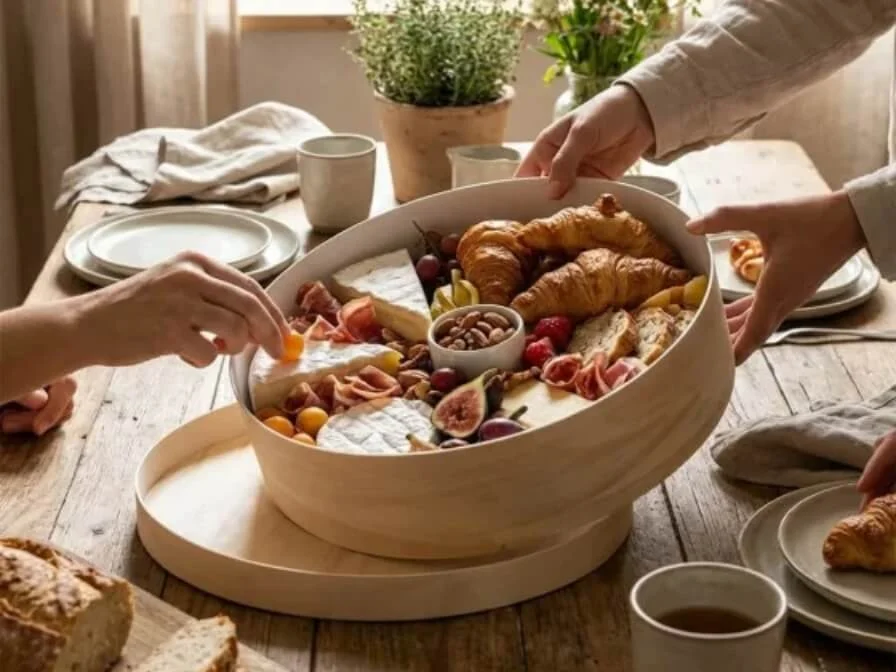
The different types of food packaging in the catering industry

Categories : Blog

The Different Types of Food Packaging in the Restaurant Industry

In the food service industry, food packaging is much more than just a container. It is the direct interface between your kitchen and your customer, ensuring food safety, temperature retention, and the image of your establishment. Whether you run a traditional restaurant, a catering service, a snack bar, or a delivery-focused dark kitchen, the choice of your food packaging solutions impacts the perceived quality of your dishes, your operating costs, and your regulatory compliance.

In short, this article covers:

  • The difference between packaging (primary, in direct contact with food) and outer packaging (secondary and tertiary)
  • The three levels of packaging used in the food service industry
  • Primary containers according to the type of dish served
  • A comparison of materials: cardboard, wood, PS, glass, and stainless steel
  • The regulatory framework: food contact, the AGEC law, and FSC® (FSC® C192681) and PEFC certifications
  • Adapting packaging to the service format: dine-in, takeaway, delivery, and events

Packaging or Wrapping: Two Terms, Two Functions

The terms “packaging” and “wrapping” are often used interchangeably. In reality, in the food service and food industry sectors, they refer to two distinct, complementary, yet hierarchical concepts. Understanding this distinction is essential for making informed choices that comply with regulations.

Packaging: the primary container in direct contact with food

Packaging refers to the primary packaging, meaning the first container that comes into direct contact with the food product. Under the French decree of April 3, 1996, which sets out the requirements for materials intended to come into contact with foodstuffs, this container must meet strict chemical compatibility and food safety requirements. Primary packaging acts as the immediate barrier between the food and the external environment.

In practical terms, in a food service setting, primary packaging is the tray in which your salad is served, the kraft cardboard soup cup that holds your velouté, or the cardboard box containing your burger. It is the container that your customer handles and that shapes their first impression.

Packaging: what protects, groups, and transports

Packaging, in the broadest sense, encompasses everything used to protect, group, and transport packaged products. This includes secondary packaging (such as the kraft paper bag that holds several containers or the cardboard sleeve that keeps a complete meal together) and tertiary packaging (such as the crate, bin, or pallet used to transport products from your central kitchen to the service location).

This distinction is crucial because it determines the regulatory requirements applicable to each level. Only the primary packaging must be suitable for direct food contact. Secondary and tertiary packaging must primarily provide mechanical protection and help maintain the required temperature.

Vacuum Packaging and Modified Atmosphere: Techniques, Not Containers

It is common to confuse vacuum packaging and modified atmosphere packaging (MAP) with types of packaging formats. In reality, they are preservation techniques used upstream of the service stage.

Vacuum packaging involves removing air from a sealed package to slow down bacterial growth. Modified atmosphere packaging (MAP) replaces the surrounding air with a protective gas mixture.

These processes fall under food preservation and processing rather than packaging in the strict sense of food service. They are mainly used in central kitchens, food preparation facilities, and food processing industries.

The Three Levels of Packaging in the Food Service Industry

To effectively manage your food service packaging logistics, it is essential to think in terms of three levels. Each level serves a specific purpose, and overlooking any of them can compromise the quality of your service.

Primary Packaging: What Your Customer Sees

It is the cornerstone of your brand image. Primary packaging is the individual container that comes directly into contact with the dish, beverage, or dessert. It must combine:

  • Food safety: suitability for food contact and no migration of harmful substances
  • Functionality: grease resistance, leak-proof performance, and microwave compatibility when required
  • Aesthetics: shape, color, transparency, and customization options
  • Practicality: ease of opening, stackability, and compatibility with lids

Common examples: verrines, cups, trays, boxes, drinking cups, bowls, disposable salad bowls, and meal boxes.

Secondary Packaging: The Packaging That Supports Service

Secondary packaging groups and organizes primary containers to make service easier. This could be the kraft paper bag in which you place a takeaway order, the presentation tray used to arrange your verrines for a cocktail reception, or the cardboard sleeve that keeps a dish, dessert, and cutlery together.

This level is essential to service logistics: it makes handling easier, reduces the risk of spills, and contributes to the customer experience. Well-designed secondary packaging speeds up service and helps prevent damage.

Tertiary Packaging: The Packaging That Gets the Food to Its Destination

Tertiary packaging is used for transportation and bulk storage. In institutional catering, event catering, and food delivery, this is the stage at which grouped orders are transported from the kitchen to the final consumption location. It includes insulated boxes, GN containers, outer cartons, and reusable containers.

One format has become a standard in the catering and buffet industry: the Atlas format. Versatile, stackable, and compatible with most presentation systems, it significantly simplifies event logistics. To understand why it has become so widely used, discover our analysis of why the Atlas format has become a standard for buffets and caterers.

The Three Levels of Packaging at a Glance

Level

Function 

Examples 

Key Requirement 

Primary

In direct contact with the food, visible to and handled by the customer

Tray, pot, verrine, bowl, cup, meal box 

Food-contact suitability is mandatory 

Secondary

Groups and organizes containers to facilitate service

Kraft paper bag, cardboard sleeve, presentation tray

Protection, handling, and breakage prevention

Tertiary

Ensures transport and bulk storage up to the point of service

Insulated box, gastronorm container, reusable container

Temperature maintenance and logistics

Types of primary packaging depending on what you serve.

Type de contenant 

Ce qu'il accueille 

Format type 

Service adapté 

Verrines et pots 

Mises en bouche, desserts, soupes, sauces 

6 cl à 40 cl 

Cocktail, buffet, traiteur 

Barquettes, bols, saladiers 

Salades, plats chauds, accompagnements 

250 ml à 1 500 ml 

Vente à emporter, livraison, self 

Boîtes, coffrets, woodbox 

Repas complets, menus, plateaux-repas 

Mono-compartiment à 5 compartiments 

Livraison, traiteur, événementiel 

Gobelets, flacons, bouteilles 

Boissons chaudes et froides, smoothies, jus 

12 cl à 70 cl 

Fast food, snacking, coffee shop 

Verrines and containers for individual portions.

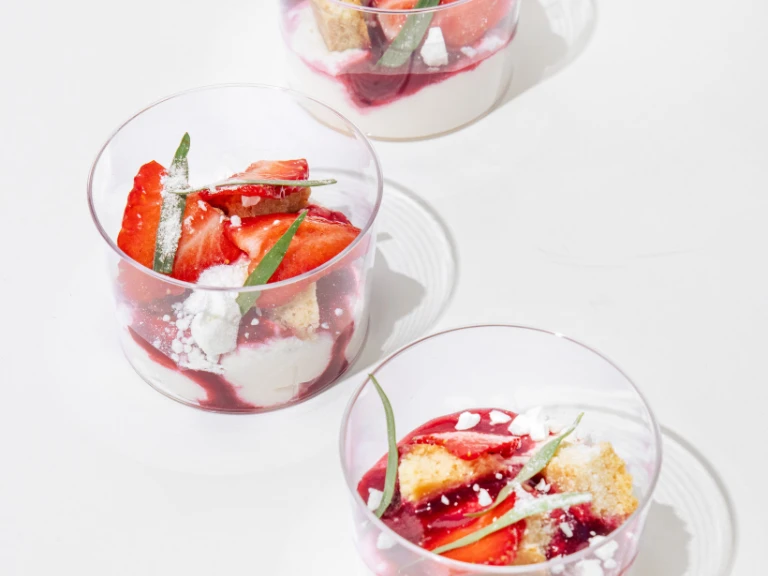
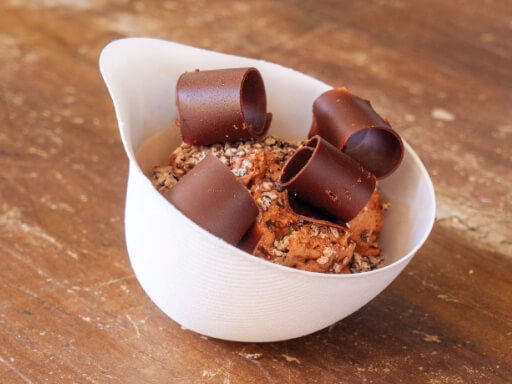
The verrine has become a must-have in catering and buffet service. Elegant and practical, it allows individual portions of mousses, creams, gazpachos, tartares, or desserts to be presented in a visually appealing format. Containers, often made of kraft paper or food-grade plastic, are used for soups, compotes, or sauces.

Choosing the right verrine depends on several factors: portion size, product consistency, serving temperature, and the style of your event. To explore this topic further, see our guide on how to choose the right verrine for your sweet and savory creations.

Kraft paper soup containers are a popular solution for snacking and takeaway services. Available in sizes ranging from 35 to 47cl, they provide good thermal insulation and can be sealed with a leak-proof lid. Some models are microwave-safe, making them an essential choice for hot dishes. 

Trays, bowls, and salad containers for meals and salads.

Food trays are the ultimate versatile packaging solution for fast food and takeaway services. They are available in cardboard, sugarcane pulp, PP (polypropylene), or PET. For salads, transparent bowls with lids help showcase the colors and freshness of the ingredients.

Kraft cardboard fries trays are a classic in street food. They come in cone, open-tray, or folding-box formats, depending on the type of service. For hot dishes, choose microwave-safe cardboard trays or PP containers, which can withstand temperatures above 100°C.

In institutional catering, large disposable salad bowls (1 to 3 liters) are ideal for serving side dishes in self-service settings. Their transparent lids provide good visibility of the contents while protecting the food from contamination.

Boxes, meal boxes, and wooden boxes for complete meals.

For complete meals, compartmentalized boxes are ideal. They allow the main dish, side dish, and dessert to be separated within a single container. Kraft cardboard or wooden boxes (wood boxes) add a premium touch to the presentation, which is particularly appreciated for corporate meal deliveries and catering events.

Cardboard boxes for burgers, hot dogs, or wraps are standards in fast food and street food. Their compact design, easy storage, and cost-effectiveness make them essential packaging solutions. Kraft cardboard versions offer a natural and authentic look that aligns with current trends.

Cups, containers, and bottles for beverages.

The cup remains the go-to container for beverages in fast food and takeaway services. Available in cardboard for hot drinks and in PET or PP for cold beverages, cups come in a wide range of sizes. Double-wall paper cups provide sufficient thermal insulation for coffee and tea, eliminating the need for an additional sleeve.

PET or glass bottles and containers are commonly used for juices, smoothies, and artisanal beverages. The choice of packaging can influence how the product is perceived: freshly pressed juice served in a glass bottle will be perceived as more premium than the same juice served in a plastic cup.

To learn more about choosing the right containers for your business, discover our dedicated article: “Snacking, Catering, Takeaway: Which Containers Should You Choose for Your Dishes?”

How Packaging Material Affects Your Dishes

The material of your food packaging is not simply a matter of aesthetics. It determines the packaging’s mechanical strength, thermal performance, recyclability, and unit cost. Here are the main options and their key characteristics.

Wood, Cardboard, and PS: Three Different Performance Characteristics in Service

Wood (poplar, bamboo) is valued for its elegant appearance in catering presentations. Wooden trays, food containers, and boxes convey an artisanal and premium image. However, wood is sensitive to moisture and is generally not microwave-safe.

Cardboard, especially kraft cardboard, is the dominant material for snack packaging and takeaway food. Lightweight, printable, customizable, and often recyclable, it offers excellent value for money. Versions with an inner coating provide resistance to grease and moisture, making them suitable for a wide range of food products.

PS (polystyrene) is still used for certain specific applications, such as presentation trays or insulated containers, but its use is declining due to environmental regulations. To better understand the practical differences between these three materials, see our comparison: “Catering Presentation Trays: How to Choose Between Wood, Cardboard, and PS.”

Glass and Stainless Steel: Reusable Packaging

The shift toward reusable packaging is transforming food service practices. Glass and stainless steel offer virtually unlimited durability and complete neutrality when in contact with food. Stainless steel bowls, glass jars, and reusable water bottles are gradually becoming more common in dine-in restaurants and in certain delivery systems using a deposit-return model.

The initial investment is higher, but the cost per use decreases quickly as the containers are reused. According to ADEME, a reusable container becomes more cost-effective than a single-use alternative after 20 to 50 uses, depending on the material and washing system. To discover the available solutions, explore our range of reusable packaging.

Material Comparison

Material

Microwave / Oven Safe

Leak-Proof

Reusable

Appearance

Typical Use

Kraft Cardboard

Depending on coating

With coating

No

Natural, printable

Snacking, takeaway

Wood (Poplar, Bamboo)

No 

With food-grade film

No

Artisanal, premium

Catering presentation

PS (polystyrene) 

Varies by grade

Yes

No

Technical

Specific applications

Glass

Yes

Yes

Yes

Premium 

Dine -in , deposit-return systems

Stainless Steel

Oven: yes / Microwave: no

Yes 

Yes

Durable, neutre 

Dine -in , reusable delivery

Reusable or Recyclable: Choosing Based on Your Turnover

The choice between reusable and recyclable packaging is not a binary one. It depends on your service volume, logistical capacity (washing facilities and storage space), and business model. A restaurant offering dine-in service has every reason to invest in reusable packaging. A high-volume delivery service may prefer recyclable or compostable single-use packaging, which is easier to manage from a logistical perspective.

The key is to consider the total cost of ownership  purchasing, storage, washing, collection, and end-of-life treatment  rather than focusing solely on the unit price. To help you make the right choice, read our analysis: Reusable or Recyclable: Which Option Should You Choose?

What Packaging Must Guarantee Above All Else

Beyond aesthetics and practicality, food packaging must first and foremost meet non-negotiable requirements in terms of safety, regulatory compliance, and environmental responsibility.

Food-Contact Safety: A Non-Negotiable Requirement

Any container that comes into direct contact with food must be suitable for food contact in accordance with European Regulation (EC) No. 1935/2004. This means that the material must not transfer substances into the food in quantities that could pose a risk to health, alter the composition of the food, or adversely affect its organoleptic properties.

In practice, always require the following from your suppliers:

  • A written declaration of compliance
  • The required regulatory marking (glass and fork symbol)

This level of vigilance is particularly important for containers intended for hot food, as heat accelerates migration processes.

Temperature Retention and Leak-Proof Performance Depending on Delivery Time

For food delivery, maintaining the hot chain (≥ 63°C) or cold chain (≤ 3°C) is a food safety requirement. Packaging plays a key role: a poorly insulated container can lose 15 to 20°C within 30 minutes of transit. Containers with gasketed lids, insulated bags, and double-wall containers are effective solutions.

Leak-proof performance is another critical factor, especially for dishes with sauces, soups, and beverages. Packaging that leaks can negatively impact the customer experience, cause food waste, and compromise food safety through cross-contamination.

AGEC Law, FSC® and PEFC: The Regulatory Framework That Shapes Your Choices

The AGEC Law (Anti-Waste for a Circular Economy) has required, since 2023, the end of single-use tableware for on-site consumption in establishments with more than 20 seats. It also provides for the gradual reduction of single-use plastic packaging, with a target reduction of 20% by 2025 (half of which is to be achieved through reuse) and the phase-out of single-use plastic packaging by 2040.

For cardboard and kraft paper packaging, FSC® (Forest Stewardship Council) and PEFC (Programme for the Endorsement of Forest Certification) certifications ensure that the fibers come from sustainably managed forests. Choosing certified packaging helps secure your supply chain while meeting growing consumer expectations regarding environmental responsibility. Discover how we integrate these requirements through our dual FSC® and PEFC certification.

Assessing Packaging Impact with PlanetScore©

PlanetScore© is an environmental labeling tool developed in France that assesses the environmental impact of food products and, by extension, their packaging. It takes into account pesticides, biodiversity, climate impact, and animal welfare. Although it primarily focuses on the food products themselves, it is gradually incorporating packaging into its assessment.

For food service professionals, PlanetScore© can become an additional selection criterion when comparing packaging solutions. By 2026, environmental labeling is expected to become more widespread in France, making this type of assessment increasingly important.

Adapting Your Packaging to Your Service Model

The best packaging is the one that perfectly matches your service model. A container that is ideal for a catered buffet may prove completely unsuitable for delivery. Here’s how to choose the right packaging for your specific needs.

Dine-In Service, Buffets, and Cocktail Events

For dine-in service, the AGEC Law now requires reusable tableware for fast-food establishments with more than 20 seats. For buffets and cocktail events, the chosen servingware serves both a presentation and a containment purpose. Verrines, mini casseroles, wooden cups, and presentation trays are among the preferred options.

The key selection criteria for this type of service are:

  • Aesthetic appeal and consistency with the event theme
  • Container stability, with no risk of tipping or spilling
  • Ease of handling for guests, ideally allowing one-handed use
  • Stackability to optimize setup and storage.

Takeaway and Click & Collect

Takeaway sales represent a rapidly growing segment, estimated at more than €55 billion in France in 2025 (source: NPD Group / CREST). The presentation and serving packaging play a key role, as customers often consume their meals in environments that are beyond the restaurant’s control, such as offices, public transport, or at home.

The key requirements are clear:

  • Perfect leak-proof performance for dishes with sauces and beverages
  • Mechanical strength to withstand transport in a bag
  • Microwave compatibility if the customer needs to reheat the food
  • Customized packaging to strengthen brand identity

Kraft paper bags remain the standard for secondary packaging in takeaway, combining strength, recyclability, and a printable surface for your branding. Kraft cardboard boxes with transparent windows allow customers to see the contents without opening the package, enhancing the overall customer experience.

To explore solutions suited to this type of service, discover our selection of takeaway packaging.

Delivery and Event Catering

Delivery is the most demanding service model when it comes to food packaging. The dish must withstand a 15- to 45-minute journey, sometimes by two-wheeler, without compromising temperature, presentation, or integrity. Tertiary packaging (the courier’s insulated bag) is not sufficient on its own: the primary packaging must also provide leak-proof performance and impact resistance.

Some telling figures: according to a 2024 Deliveroo study, 68% of customers say that packaging quality influences their decision to order again. In addition, 41% of negative reviews on delivery platforms mention an issue related to the packaging used, such as leakage, spilled food, or insufficient temperature.

For events, the logistics are different but equally demanding. Large volumes must be transported, the hot or cold chain must be maintained over extended periods, and the presentation must be flawless upon arrival. Atlas-format trays, insulated boxes, and transport covers are essential equipment for event caterers.

Here is a summary of the priorities for each service model:

Service Model

Priority n°1 

Priority n°2 

Priority n°3 

Dine-in / Buffet

Aesthetics

Practicality

Reusability

Takeaway

Leak-proof performance

Customization

Recyclability

Delivery

Mechanical strength

Temperature retention

Leak-proof performance

Event Catering

Volume and logistics

Presentation

Temperature retention

Food packaging in the food service industry is not simply a cost item: it is a driver of quality, compliance, and differentiation. Every type of container, every material, and every level of packaging serves a specific purpose. By taking a structured approach  from primary to tertiary packaging, from the dish being served to the service model, and from unit cost to total cost  you can make choices that are sustainable, cost-effective, and aligned with both customer expectations and current regulations.

Take the time to audit your current packaging, test new solutions, and measure their impact on customer satisfaction. This is often where customer loyalty is won.

FAQ

What Is the Difference Between Packaging and Food Containers in the Food Service Industry?

Packaging refers to the primary packaging that comes into direct contact with the food (tray, container, or verrine). Packaging also encompasses secondary and tertiary packaging, which provide protection and facilitate transport. Only primary packaging must be suitable for direct food contact.

What Are the Three Levels of Food Packaging?

The primary level (in direct contact with the food and visible to the customer), the secondary level (grouping packaging for service, such as bags, sleeves, and trays), and the tertiary level (for bulk transportation, such as boxes and insulated containers). Each level serves a distinct purpose.

How to Choose the Right Type of Packaging for Takeaway?

Choose leak-proof containers that are grease-resistant and microwave-safe if the food needs to be reheated. Kraft cardboard boxes, PP trays, and lidded containers are reliable choices.

Which Materials Should You Choose for Eco-Friendly Food Packaging?

Kraft cardboard, wood from sustainably managed forests, sugarcane pulp, and reusable glass or stainless steel. Reusable packaging becomes more cost-effective with high turnover, while recyclable single-use packaging remains a relevant option for high-volume delivery.

What does the AGEC Act say about packaging in the catering sector? ​

Since 2023, it has prohibited single-use tableware for dine-in service in establishments with more than 20 seats. It also aims to phase out single-use plastic packaging by 2040, with the gradual expansion of reusable solutions.