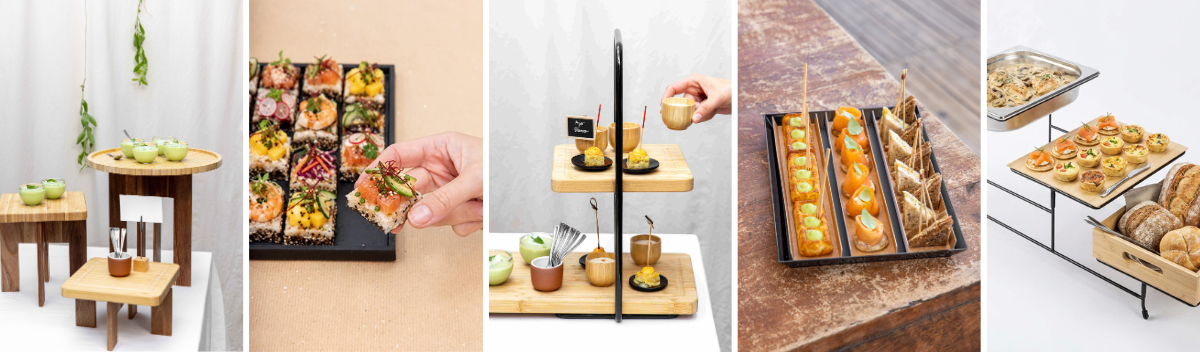
Buffet display stands: how to showcase your dishes at receptions

Categories : Blog

Buffet display stands: how to showcase your dishes at receptions

Picture a perfectly stocked reception table: colourful verrines, curated cheese boards, bite-sized treats arranged with care. Yet despite the quality of the food, guests' eyes drift across the spread without stopping. Why? Because everything sits flat, at the same level, with no relief or visual rhythm. Making a buffet shine is not just about the quality of the dishes it's about how they are presented, and that is precisely where the buffet display stand comes into play.

A well-chosen display stand creates height, structures the space and guides the eye. It transforms a simple laden table into an engaging visual scene. Whether you are a professional caterer, an event planner or simply in charge of a wedding buffet, understanding how to select and arrange your display stands will dramatically change the impact of your receptions.

In a nutshell: the choice of display stand influences the perception of your dishes just as much as their taste. Playing with heights, matching the material to the atmosphere and thinking through the logistics are the three pillars of a successful buffet.

In summary:

  • Height takes precedence over surface area: three different heights create a much more effective table setup than simply using a longer table.
  • The material should be chosen based on both function and style: wood for cold foods, stainless steel for hot dishes, and transparent materials for verrines.
  • The display stand should adapt to the food, not the other way around: weight, temperature, and fragility determine the appropriate support.
  • Logistics are a purchasing criterion in their own right: a modular, dismantlable model is quicker to transport, store, and set up than a one-piece unit.
  • A set of combinable heights is better than accumulating individual pieces purchased one at a time.

What makes a buffet table catch the eye or fall flat

Create visual impact with height rather than surface area

The most common reflex when faced with a large number of dishes is to spread everything out. We make the table longer, add more tablecloths, and fill every square inch. This is exactly the opposite of what you should do.

An effective buffet is built in volume, not surface area. By creating different levels using display stands of varying heights 10 cm, 20 cm, 30 cm you create a visual landscape. The eye is naturally drawn to the higher points before moving down to the finer details. In a market where consumers are increasingly attentive to the perceived value of their meal, the experience offered becomes a key differentiating factor. As highlighted by Food Service Vision in its Strategic Review, September 2024, “professionals need to strengthen their value proposition to attract consumers once again. The presentation of dishes and the visual experience of the buffet fully contribute to this objective.”

In practical terms, place your signature pieces  cakes, tiered creations, floral centerpieces at height, and arrange verrines and bite-sized appetizers on intermediate levels. Keep sauces and accompaniments at table level.

Guiding the eye and smoothing guest circulation

A well-designed buffet is not just beautiful: it is functional. The arrangement of the display stands should guide guests along a logical flow, avoiding bottlenecks and dead zones.

Here are a few rules to follow:

  • Place the largest elements in the center or at the back of the table to create a focal point.

  • Arrange plates and cutlery at the beginning of the flow, main dishes in the middle, and desserts at the end.

  • Leave 15 to 20 cm of space between each display stand so guests can serve themselves without getting in each other’s way.

  • Use a table runner or a contrasting tablecloth to visually define the flow.

L'erreur classique de l'alignement à plat

Flat, one-level alignment is the most common mistake, even among professionals working under time constraints. All the dishes are placed directly on the table at the same height, creating a visual monotony that makes even the most refined dishes look ordinary.

The result: guests do not know where to start, some dishes are overlooked, and the overall impression feels more like a cafeteria than an elegant reception. Simply introducing three different heights is enough to break up this monotony and restore a sense of prestige to the entire buffet.

Choose the display stand material to match the atmosphere of the event

Before discussing equipment, it is essential to understand the visual principles that make a buffet attractive. Buffet presentation relies on simple but often overlooked principles: verticality, visual guidance, and smooth guest flow.

Wood, for a warm and natural presentation

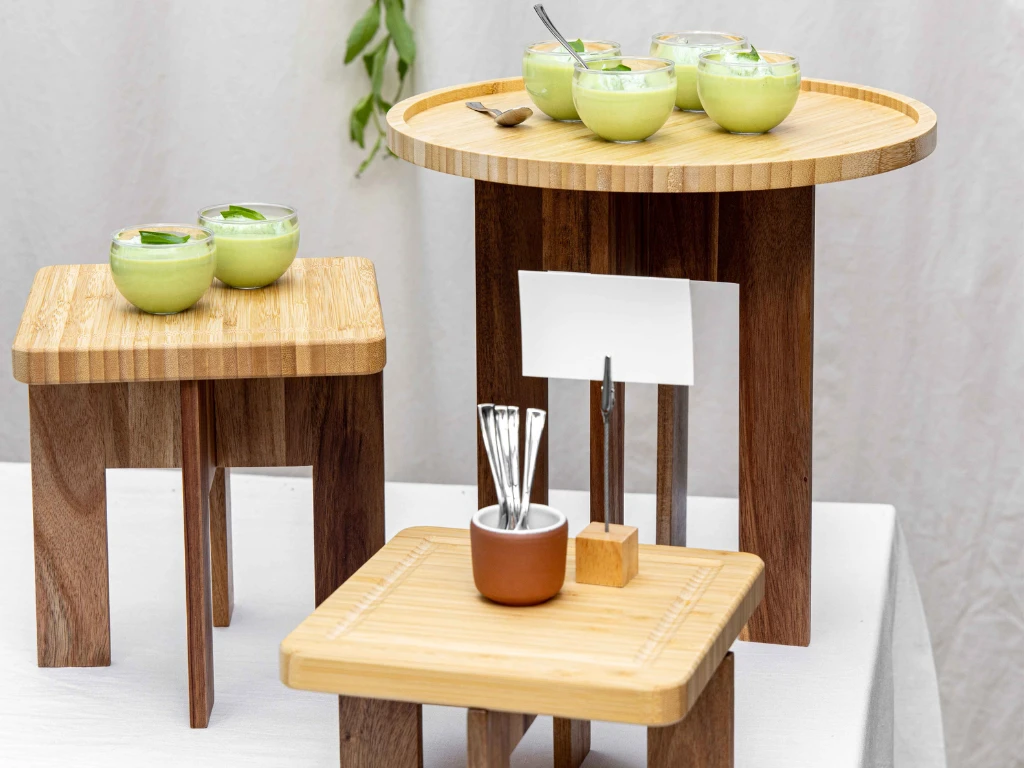
Wood is arguably the most versatile material for a buffet. It works equally well for a rustic country-style wedding buffet or a corporate cocktail reception with Scandinavian influences. Its warm texture naturally enhances cheeses, charcuterie, and cold dishes.

Wooden buffet display stands are available in a wide range of wood species and finishes. Choose food-contact-safe treated wood that is dense enough to support the weight of your fully loaded serving platters.

One of the major advantages of wood is that it develops a beautiful patina over time, giving it a unique character. However, it does require regular maintenance to prevent staining and warping caused by moisture.

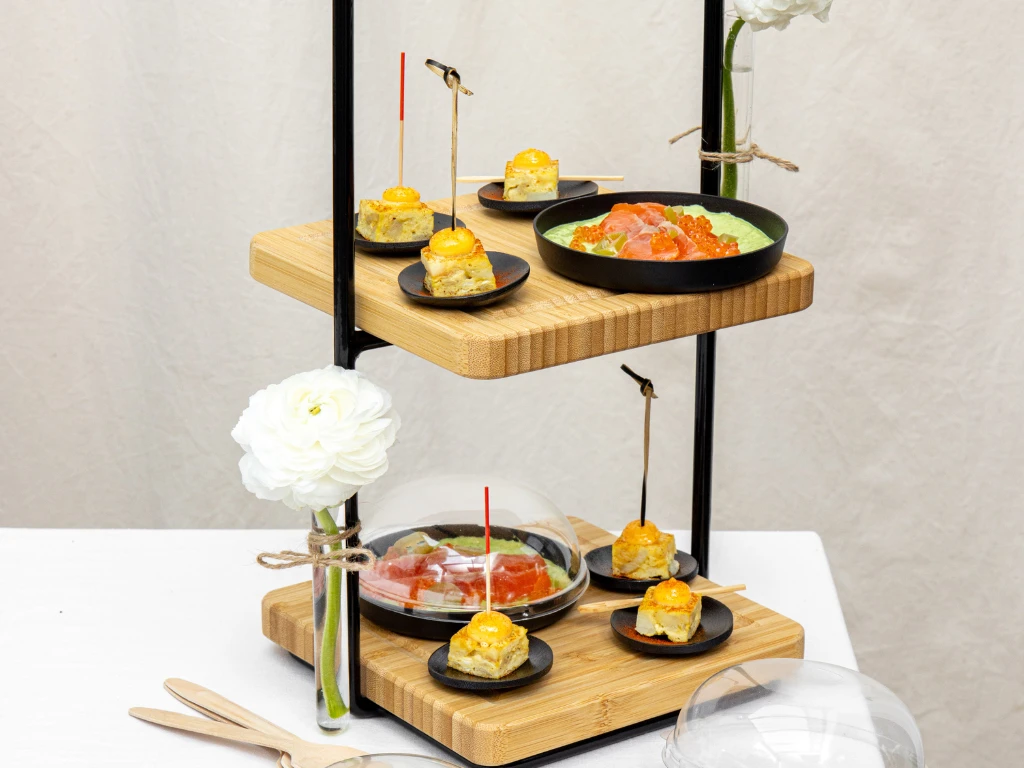
Bamboo, for an elegant and structured cocktail reception

Bamboo combines lightness with strength. It adds a touch of natural elegance while being lighter than solid wood, which makes transport easier. It is a smart choice for outdoor catering buffets or events where equipment must be moved quickly.

Its fine, regular grain pairs well with minimalist presentations: sushi, appetiser bites, tapas. Bamboo is also prized for its eco-friendly credentials, an argument increasingly valued by clients in 2025–2026.

What the material changes for maintenance and reuse

The choice of material directly impacts the lifespan of your display stands and their running cost. Here is a quick comparison:

MaterialMaintenanceDurabilityWeightStyle
WoodModerate (regular oiling)HighMedium to heavyWarm, rustic
BambooEasy (simple wash)GoodLightNatural, clean
Stainless steelVery easyVery highHeavyProfessional, modern
MelamineVery easyMediumLightVaried (imitations)
Chrome metalEasy (fingerprint marks)HighMediumContemporary
Acrylic / glassEasy but fragileMediumVariableElegant, transparent

Another question to consider is end-of-life: should you go reusable or recyclable? For a caterer who handles back-to-back events, reusable wins. For a one-off occasion, recyclable solutions can be more appropriate.

Matching the display stand to the type of food served

Every category of food has its own constraints: weight, temperature, shape, fragility. The display stand must adapt to the content not the other way round. An unsuitable support can ruin the presentation and compromise food safety.

Verrines, canapés and bite-sized pastries

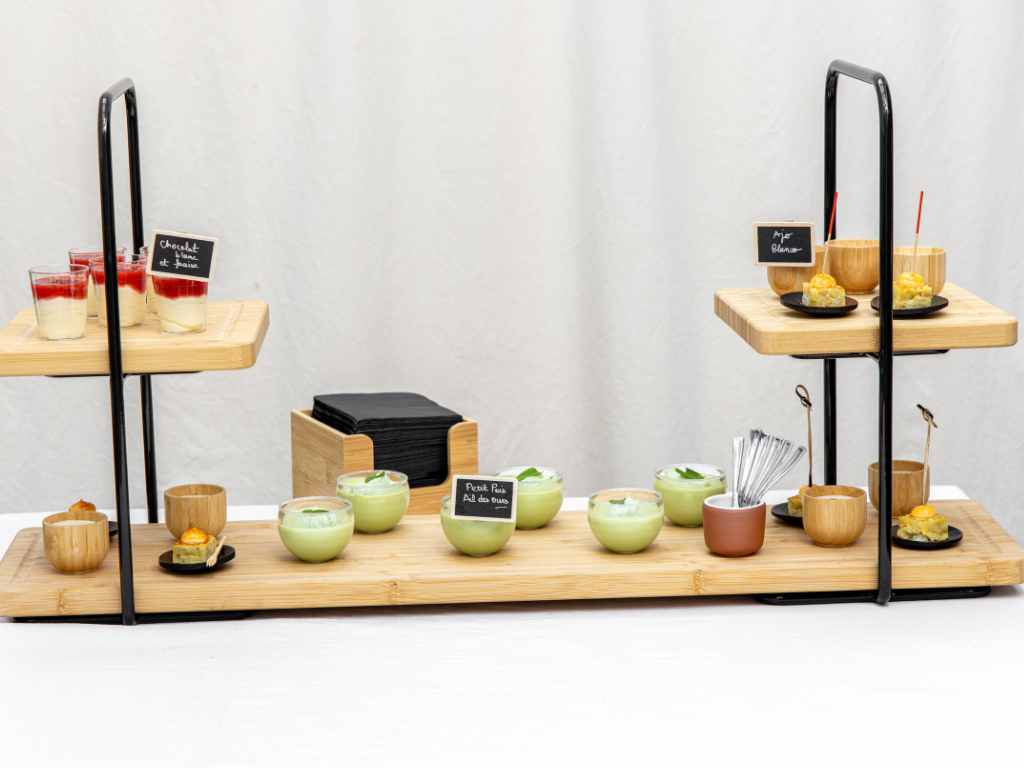
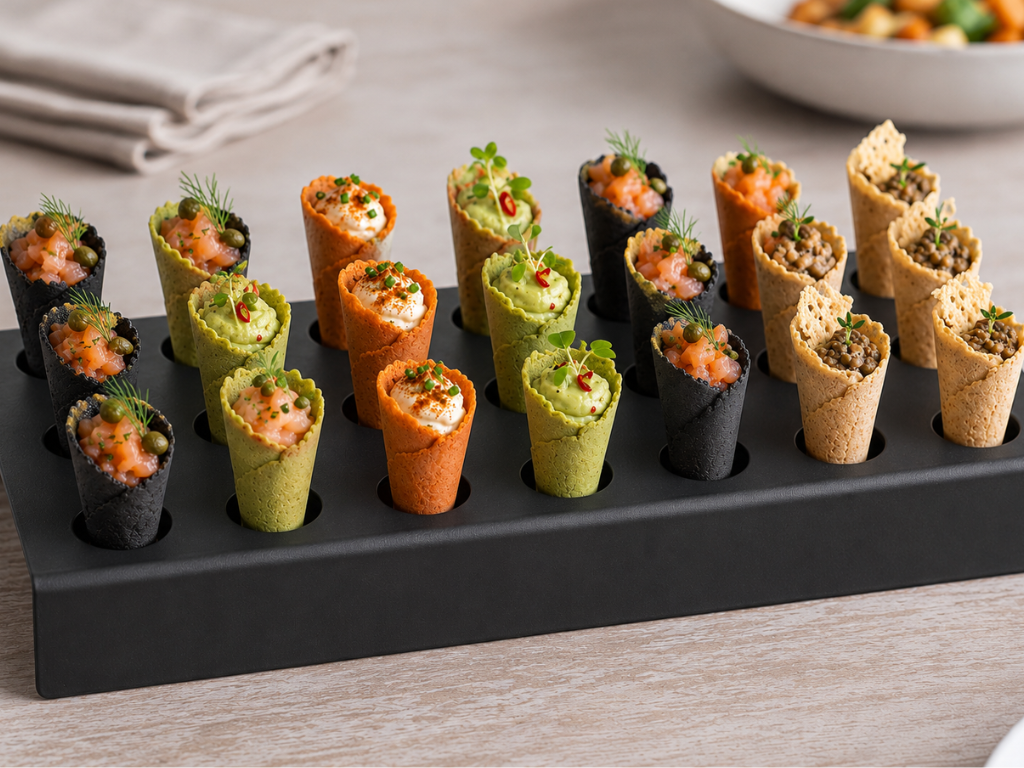
Verrines are the stars of cocktail buffets. Their individual format simplifies service and limits waste. But to be visible and accessible, they need elevation.

Opt for tiered display stands or presentation staircases. Transparent acrylic models are particularly effective: they highlight the verrines' colours without visually weighing down the table. For petits fours, a multi-level stand with shallow rims will stop small pieces from sliding off.

Tip: arrange verrines in a colour gradient to create a striking visual effect that draws guests in immediately.

Cheese, charcuterie and cold platters

These products are naturally suited to being presented on wooden or slate boards. The key is to leave enough space between each item so that every cheese or slice of charcuterie can be easily identified.

A raw wooden board with a slight incline, created using an angled stand, will showcase a selection of cheeses much better than a simple flat serving platter.

Don’t forget the labels: a small handwritten card in front of each product adds a thoughtful touch that guests greatly appreciate.

Hot dishes: the challenge of stability and heat resistance

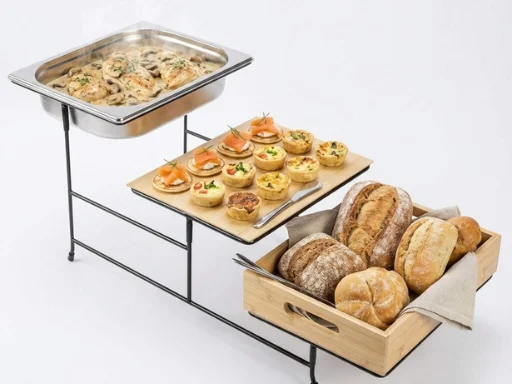
Hot dishes present an additional challenge. The display stand must withstand heat without warping, while the serving container needs to maintain the food’s temperature. This is where stainless steel really comes into its own.

Stainless steel chafing dishes, placed on stable supports, are essential for hot buffets. Make sure to choose supports that are heavy enough to prevent any risk of tipping, especially if the table is accessible to children.

For warm dishes such as quiches and puff pastries, a thick wooden board may be sufficient, provided it is not exposed to direct heat for too long.

Designing the display stand with transport and setup in mind

A beautiful display stand that is impossible to transport is a poor investment. For catering professionals, logistics is a selection criterion just as important as aesthetics.

Modularity and easy disassembly for loading

Choose stackable or dismantlable display stands. A three-piece presentation riser that nests together will take up half as much space in a van as a one-piece model.

Modularity also makes it possible to adapt to each event: a small cocktail reception for 30 guests will require a different setup from a wedding buffet for 200 guests. By investing in a modular system, you build an adaptable kit that can meet all kinds of requirements.

On-site setup time: an often-overlooked cost

Every minute spent setting up a buffet on site comes at a cost: labor, stress, and the risk of mistakes. A well-designed display stand can be assembled in seconds, without tools, and delivers a professional result immediately.

Experienced caterers know this: a buffet that can be set up in 15 minutes instead of 45 frees up time to fine-tune the decoration, check the quality of the dishes, and welcome the first guests with peace of mind.

Consistency with the rest of the table setting

A display stand does not exist in isolation. It must fit into a coherent whole: tablecloth, tableware, glassware, floral decoration. Choosing a standard format simplifies this integration. This is precisely why the Atlas format has become a standard for buffets and caterers: it guarantees optimum compatibility across all table-dressing elements.

Also think about material harmony. A wood-and-steel mix can look great when well managed, but a random patchwork of plastic, glass and chrome without a unifying thread will look messy.

Building a coherent range of display stands for your receptions

Whether you are a caterer, restaurateur or event organiser, the goal is to build a stock of versatile, combinable display stands suited to the majority of your services.

Ideally, you should have at least three display-stand heights: low (8–12 cm), medium (18–22 cm) and tall (28–35 cm). This trio covers 90 % of setup needs and lets you create an eye-catching landscape on any buffet table.

Add platters of various dimensions and you have a complete system. Explore the full display-stand range to find the combinations that match your activity.

Suggested starter kit for a caterer:

  • 2 tall stands (for centrepieces and desserts)
  • 4 medium stands (for verrines, canapés, cheeses)
  • 6 low stands or platters (for charcuterie, breads, sides)
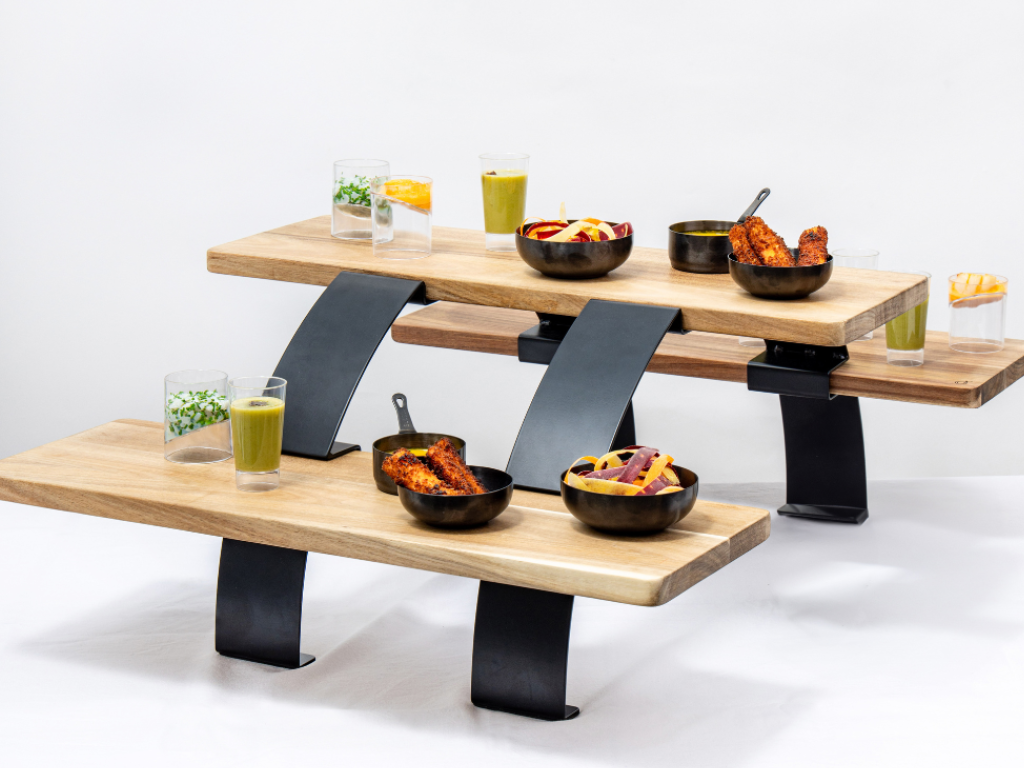
  • 2 angled supports (for a cascade presentation)

Testing a display stand before equipping your entire operation

Investing in a full range without testing the product under real conditions is risky. Dimensions, stability, visual impact once loaded: some details can only be verified through hands-on use.

That is why it makes sense to request a free sample before placing a large order. You can then validate quality, check compatibility with your existing tableware and gauge client reactions during an actual event.

Pro tip: photograph your trial setups under different lighting conditions (daylight, hall lighting, dimmed ambiance). A display stand can look very different depending on the light.

A successful reception buffet is never just about the selection of dishes on offer. It is the combination of high-quality food and thoughtful presentation, enhanced by carefully chosen display stands, that creates the “wow” factor for your guests. Take the time to select the right materials, test different arrangements, and build a cohesive range: your buffet will then become the true highlight of each of your events.

FAQ

How can a buffet display stand truly change the look of a reception?

A buffet display stand creates relief and visual rhythm on the table. By playing with heights it guides guests' eyes, highlights star dishes and conveys a sense of generosity and care. A buffet structured with height holds attention up to 40 % longer than a flat one.


Which material should you choose for a buffet display stand based on the atmosphere?

Wood suits warm, rustic settings; bamboo fits elegant cocktails; stainless steel and chrome metal work for contemporary receptions; and acrylic or glass elevate high-end events. The choice also depends on desired maintenance and frequency of use.


How do you match a display stand to the type of food being served?

Each type of food has its own requirements. Verrines and canapés benefit from being elevated on tiered stands. Cheeses and charcuterie look their best on wooden or slate platters. Hot dishes require stainless-steel supports that withstand heat without warping.


Should you use reusable or disposable display stands for catering buffets?

For a catering business running regular events, reusable stands in wood, bamboo or stainless steel are more cost-effective long-term. For one-off occasions, recyclable solutions offer a good balance between cost and environmental impact.


How many display stands do you need for a reception buffet?

A basic kit for a standard buffet includes at least 2 tall stands, 4 medium stands and 6 low stands or platters. This set of heights covers most needs and allows you to create a visually structured buffet for 50 to 200 guests, depending on the size of the elements chosen.

A successful reception buffet is never just about the menu. It is the combination of quality food and thoughtful presentation, punctuated by well-chosen display stands, that creates the "wow" factor for your guests. Take the time to select the right materials, test your arrangements and build a coherent range: your buffet will then become the true highlight of every reception.