



Reuse decree in foodservice: what are the obligations for professionals?
Reuse decree in foodservice: what are the obligations for professionals?
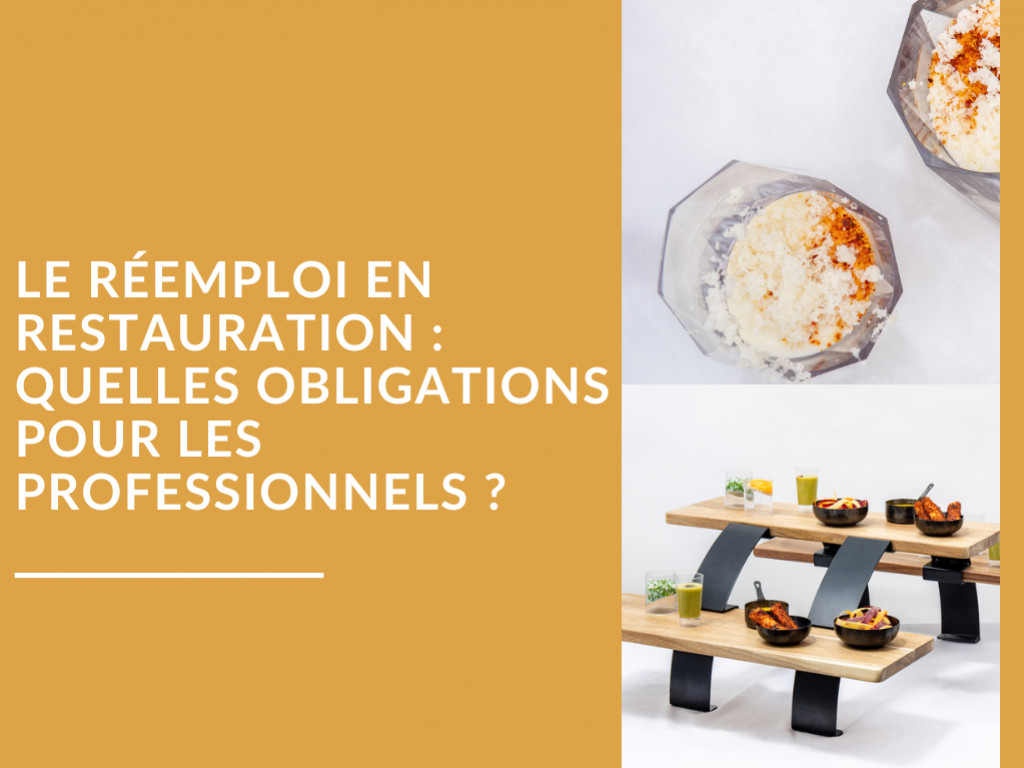
Since the enforcement of France's AGEC law and its numerous implementing decrees, the foodservice sector has undergone a deep regulatory transformation — one that is increasingly influencing legislation across Europe. Disposable tableware banned for dine-in, reusable packaging made mandatory, reinforced waste sorting, eco-contributions on supplier invoices… The texts have multiplied, and it has become difficult for a restaurant operator to know exactly what applies to their establishment.
In 2025 and 2026, new deadlines have further expanded the framework. The bottom line: the reuse decree in foodservice is no longer a topic you can put off. Inspections are ramping up and fines can reach several thousand euros.
In a nutshell: regulations require foodservice operators to serve dine-in meals in reusable tableware, offer reusable or recyclable containers for takeaway, accept containers brought by customers, and sort their packaging waste at source. This article breaks it down text by text, obligation by obligation, so you can bring your establishment into compliance without disrupting your service.

Reuse in foodservice: multiple texts, two distinct audiences
Before detailing each obligation, it is essential to understand the regulatory architecture. Behind the generic term "reuse decree foodservice" lie several texts that do not all target the same stakeholders.
The AGEC law of 2020: the foundation of all reuse obligations
France's Law No. 2020-105 of 10 February 2020 on combating waste and promoting a circular economy (known as the AGEC law) is the founding text. It established the key principles:
- Gradual phase-out of single-use plastic packaging.
- Mandatory reuse for dine-in foodservice.
- Implementation of Extended Producer Responsibility (EPR) schemes for professional packaging.
- Quantified targets for reduction, recycling and reuse of packaging by 2025 and 2030.
The AGEC law has since been supplemented by a series of decrees and orders specifying timelines, thresholds and penalties.
The texts that bind you as a restaurant operator
Two references in the French Environmental Code directly affect foodservice professionals:
- Article L. 541-15-10: prohibits the provision of disposable plastic cups, plates and cutlery for dine-in consumption and mandates reusable containers in establishments serving more than 20 covers simultaneously.
- Article D. 541-342: specifies the implementation details, including compliance deadlines, categories of utensils covered and conditions under which a restaurant operator may still use single-use containers for takeaway.
The texts that bind packaging producers
Decree No. 2022-507 of 8 April 2022 sets minimum proportions of reused packaging that producers must meet above a certain revenue threshold. This text does not apply directly to the restaurant operator but shapes the supply available on the market.
Reuse, reuse, recycling: three words, three legal regimes
- Reuse (réemploi): the container is used again for an identical purpose without any transformation.
- Repurposing (réutilisation): the container is used again, possibly for a different purpose, after cleaning.
- Recycling: the material is transformed into a new raw material.
From a regulatory standpoint, reuse is prioritised over repurposing, and repurposing over recycling. For more on this topic, read our article reusable or recyclable — which should you prioritise?
The obligation to use reusable tableware for dine-in service
This is the most visible obligation. Since 1 January 2023, all foodservice establishments serving meals on-premises must use reusable tableware: plates, cups, cutlery, and containers for sauces and desserts.
This measure applies to fast food, traditional restaurants and contract catering alike. According to France's Ministry for Ecological Transition, 78% of fast-food establishments were compliant in Q1 2025, up from 56% a year earlier. Non-compliant operators face fines of up to €15,000 for a legal entity.
For professionals looking to upgrade, discover our reusable range designed for professional foodservice.

What the reuse decree requires for takeaway and delivery
Takeaway and delivery follow different rules from dine-in, but the obligations are equally binding.
Offering a reusable or recyclable container to the customer
Since 1 January 2023, any restaurant operator offering takeaway must give the customer the option to choose a reusable container. In practice, the operator must:
- Clearly display the reusable option (poster, menu mention, app notification).
- Not charge more for the reusable container than for the disposable one.
- Maintain sufficient stock to meet demand.
Accepting containers brought by the customer
The legislation requires restaurant operators to accept a customer's own container for takeaway food, provided it is visibly clean and suitable. The operator may refuse only if the container poses a clear hygiene risk.
In 2026, an ADEME study reports that 12% of fast-food customers regularly bring their own container — up 4 percentage points since 2024.
The obligation to provide a container for leftovers
Every foodservice establishment must offer customers a container to take away unconsumed food. This so-called "doggy bag" must be reusable or, failing that, recyclable.
Deposit schemes: what the law mandates and what it leaves to your choice
A deposit scheme is a powerful lever for ensuring the return of reusable containers. The law does not impose a universal deposit system but regulates its implementation:
- The deposit amount must be reasonable and clearly displayed.
- The operator can choose between a financial deposit or a loyalty-based system.
- Local authorities may set up shared deposit schemes.
To choose the right containers for your takeaway business, check out our guide on which containers to choose for your takeaway dishes and browse our takeaway packaging selection.
The professional packaging EPR: the obligation that reaches you through your suppliers
The professional packaging EPR scheme impacts you indirectly but very concretely — through your wallet.
From foodservice EPR to professional packaging EPR
Extended Producer Responsibility (EPR) requires manufacturers and importers of packaging to fund the collection, sorting and recycling of waste generated by their products. Since 1 January 2025, EPR has been extended to professional packaging, including that used in foodservice.
What the eco-contribution means for your invoices
The eco-contribution is passed on by suppliers in the selling price of packaging. In 2025–2026, foodservice professionals report an average increase of 3 to 8% in the cost of disposable packaging:
| Packaging type | Estimated eco-contribution increase |
|---|---|
| PP plastic tray | +6 to 8% |
| Cardboard tray | +2 to 4% |
| PET plastic cup | +5 to 7% |
| PE stretch film | +3 to 5% |
| Bagasse or moulded fibre container | +1 to 3% |
Your obligations for source-sorting packaging waste
Since 1 January 2024, all establishments producing more than 5 tonnes of waste per year must sort at source:
- Paper and cardboard.
- Plastic.
- Glass.
- Metal.
- Bio-waste.
Non-compliance carries an administrative fine of up to €750 per infringement.
Bringing your establishment into compliance without disrupting service
Achieving compliance with the reuse decree in foodservice may seem daunting. Here is a four-step method to make it manageable.
Audit your container inventory, station by station
- Dine-in: plates, bowls, cups, trays.
- Takeaway: boxes, trays, bags, cups, lids.
- Kitchen: films, disposable gastronorm trays.
For each station, identify items still made of single-use plastic and assess weekly volumes. This mapping will let you prioritise replacements.
Size your washing, storage and rotation capacity
- Dishwashing capacity: can your machine handle the extra volume?
- Storage space: reusable containers take up more room than stacks of disposables.
- Rotation rate: for takeaway with deposit, a ratio of 3 containers per point of sale is often recommended.
Calculate the break-even point for reusable containers
According to a 2024 ADEME study, the break-even point typically falls between 15 and 30 uses for a reusable polypropylene container. Beyond that, every additional cycle generates a net saving compared with the cumulative cost of disposables, eco-contributions and waste management.
Discover our selection of reusable containers for caterers.
Test a reusable container before switching an entire service
- Select one or two replacement products suited to your offering.
- Test them over a two-to-four-week period.
- Measure customer feedback, breakage rates and impact on service speed.
- Adjust and roll out progressively.
To receive samples and test before committing, feel free to request a free sample.

Key takeaways — FAQ
What are the reusable tableware obligations for dine-in service?
Since 1 January 2023, all foodservice establishments serving meals on-premises must use reusable tableware. Non-compliance can lead to fines of up to €15,000 for a legal entity.
What containers are required for takeaway under the reuse decree?
Restaurant operators must offer a reusable container as an alternative to disposable for takeaway. They must also accept containers brought by customers. A deposit system can be implemented to ensure the return of reusable containers.
How does the professional packaging EPR affect restaurant operators?
Extended Producer Responsibility requires packaging manufacturers to fund collection and recycling through an eco-contribution passed on in prices, resulting in a 3 to 8% increase for foodservice operators. In parallel, establishments must sort their packaging waste at source.
What is the break-even point for a reusable container?
According to ADEME, the break-even point for a reusable polypropylene container lies between 15 and 30 uses. Beyond that threshold, each additional cycle generates a net saving.
What penalties does a non-compliant restaurant operator face?
Penalties vary by infringement: up to €15,000 for using disposable tableware for dine-in, €750 per waste-sorting infringement, with additional penalties for repeat offences. Inspections have intensified since 2025.
The reuse decree in foodservice is not just a regulatory burden — it is a competitive lever. Establishments that act early cut their packaging costs, enhance their image among increasingly eco-conscious customers, and stay ahead of rules that will only tighten by 2030.