How to choose the right verrine for your sweet and savoury creations?
Whether you're a caterer, a chef or a food enthusiast, the verrine has become a staple of culinary presentation. Elegant, practical and versatile, it can showcase both a refined dessert and a savoury amuse-bouche. But with the wide variety of models available on the market, how do you choose the right verrine for your sweet and savoury creations? Capacity, material, shape, purpose… Every detail matters to ensure a result worthy of your ambitions.
In this article, we guide you step by step to select the perfect verrine based on your needs. You'll discover the essential criteria to consider, inspiring recipe ideas and the mistakes to avoid for flawless presentations every time.
Why has the verrine become essential in the kitchen ?
The verrine established itself in the world of catering and hospitality from the early 2000s. Its success shows no signs of slowing down. In 2025, the market for disposable and reusable tableware for caterers grew by over 8% in Europe, driven notably by demand for elegant individual containers.
This individual format responds to several current trends:
Hygiene and practicality of individual portions
The pursuit of aesthetics in food presentation
Menu personalisation for events
The ability to layer textures, colours and flavours visibly
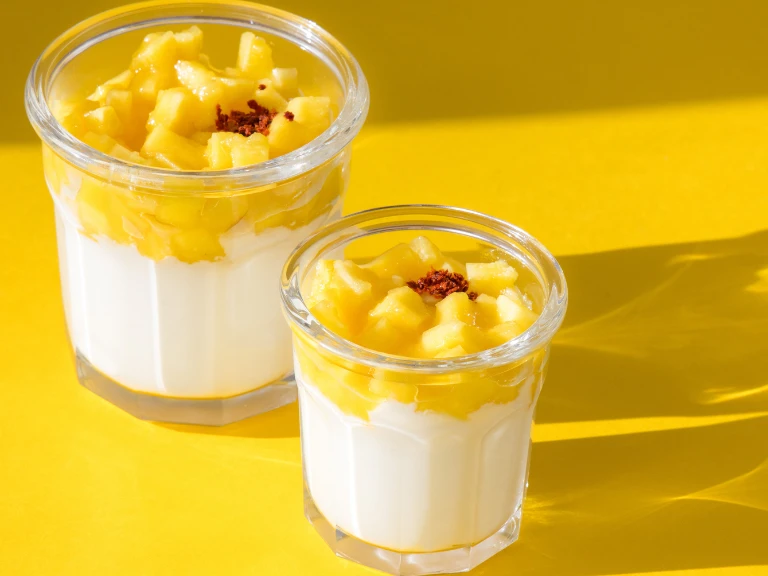
The transparency of the verrine offers a true visual spectacle. It invites the guest to discover the different layers of a preparation before even tasting it. It's a culinary storytelling tool in its own right.
Choosing your verrine by capacity
5 cl verrines: the art of the amuse-bouche
5 cl verrines are ideal for amuse-bouches and bite-sized starters during cocktail receptions. Their small format allows you to offer a wide variety of flavours without overwhelming guests. They're perfect for preparations with concentrated flavour such as a delicate tarama or an intense mousse.
Allow approximately 8 to 12 verrines of 5 cl per person for a full cocktail reception, alternating sweet and savoury.
10 cl verrines: the versatile format
This is the most common and versatile format. The 10 cl verrine works equally well for an individual dessert or a cold starter at a buffet. It offers enough space to layer three to four preparations while remaining elegant.
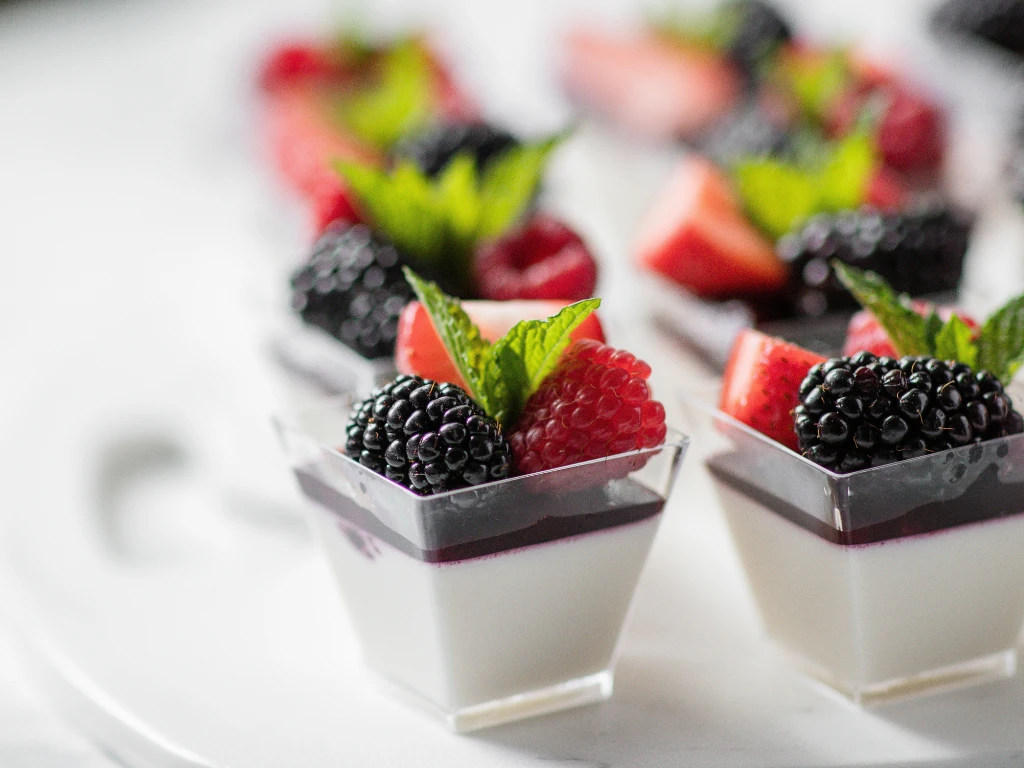
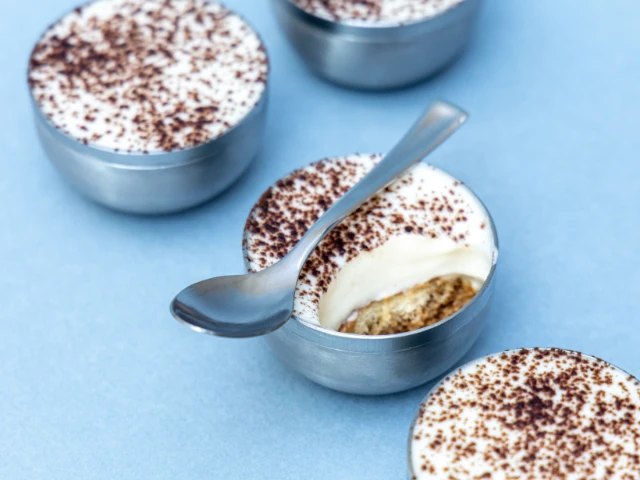
This format is particularly appreciated by caterers as it suits most classic recipes: panna cotta, velouté, cream dessert, tiramisu, etc.
20 cl verrines and above: for generous creations
Verrines of 20 cl and above are designed for more substantial preparations. They can serve as a full individual dish or a generous dessert. They're often used for trifles, frozen parfaits or chilled soups served as starters at seated meals.
However, be careful not to visually overload these large formats. The golden rule is never to fill beyond three-quarters to maintain an airy presentation.
Choosing your verrine by material
Polystyrene (PS): lightweight and practical
Polystyrene (PS) verrines are the most widely used in the event catering sector. Lightweight, economical and available in a wide variety of shapes, they allow you to serve large numbers of guests without risk of breakage.
Their advantages:
Very low unit cost
Wide choice of designs (round, square, asymmetric…)
Transparency close to glass
Easy storage and transport
Glass: elegance and durability
Glass verrines offer superior presentation quality. Their weight, shine and crystal-clear transparency make them the preferred choice for gastronomic restaurants and high-end receptions.
Glass is reusable, making it a lasting investment. However, it requires careful handling and appropriate storage to avoid breakage. Its weight can also be problematic during mobile service (standing cocktails, for example).
Ceramics: refinement and creativity
Ceramics verrines bring a touch of originality and sophistication. Opaque, they play on the surprise effect: the guest only discovers the contents at the moment of tasting. They're particularly suited to chef's table or gastronomic meal presentations.
Ceramics handles temperature variations well, allowing you to serve both hot and cold preparations.
Choosing your verrine by use
For a cocktail reception
During a cocktail reception, favour small format verrines (5 to 8 cl), easy to hold in one hand. Lightweight materials such as PS are recommended to reduce strain on servers and facilitate circulation.
Also consider verrines with lids for preparations that need to be made in advance and kept chilled.
The shapes of verrines: an aesthetic and functional consideration
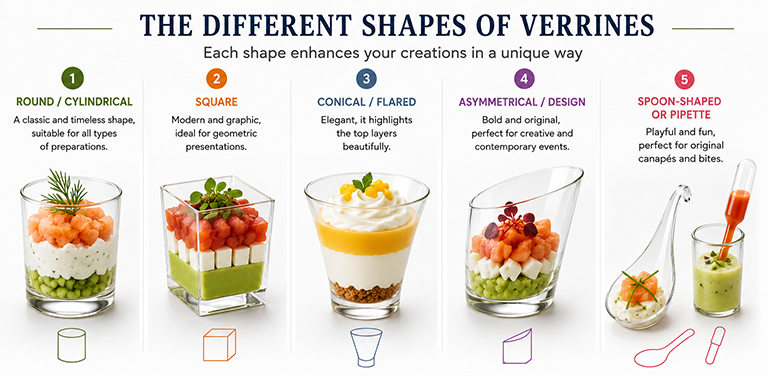
Beyond capacity and material, the shape of the glass directly influences the presentation of your creations:
- Round/cylindrical: classic and timeless, suitable for all preparations
- Square: modern and graphic, ideal for geometric presentations
- Conical/flared: elegant, it highlights the top layers
- Asymmetrical / designer: bold, for creative and contemporary events
- Spoon- or pipette-shaped: playful, perfect for original appetizers
The choice of shape must always be consistent with the type of dish. A light mousse will be enhanced in a flared shape, while a mille-feuille of flavors will be more visually appealing in a narrow cylindrical format.
3 recipe ideas to elevate your verrines
For inspiration, here are three recipes from our recipe book that perfectly illustrate the diversity of possible verrine creations:
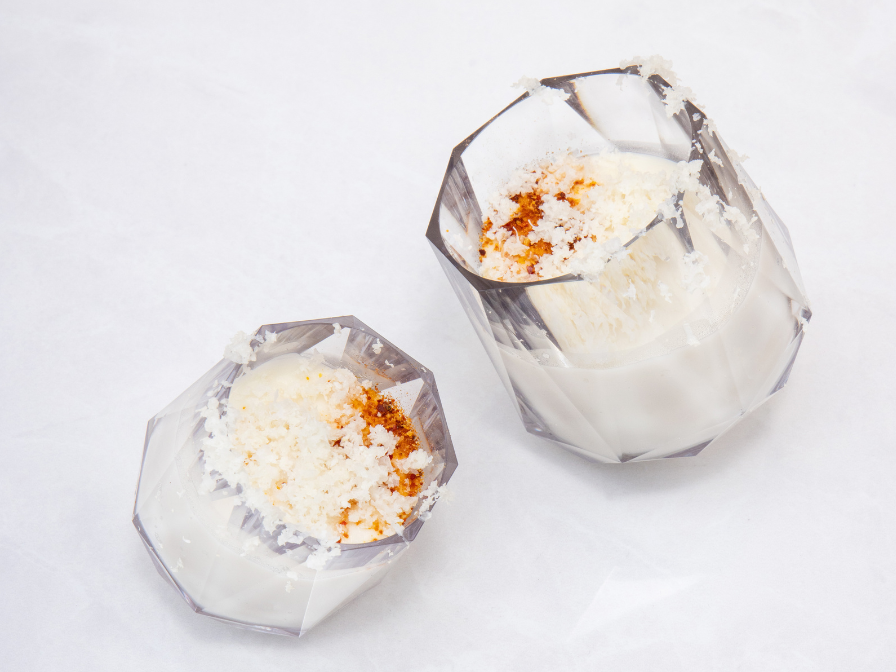
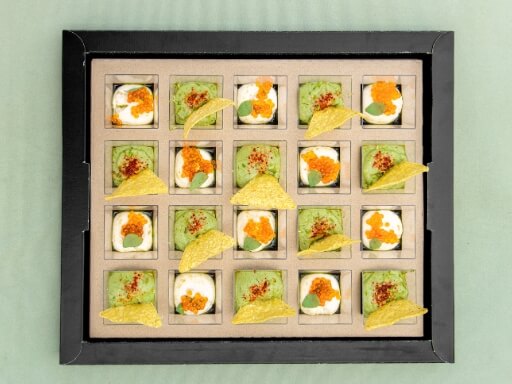
Avocado siphon & tortilla, tarama, cod roe
This recipe plays on texture contrasts: the airy avocado siphon mousse, the crunch of crumbled tortilla and the smoothness of tarama topped with cod roe. Served in a 6 cl verrine, it makes a spectacular amuse-bouche for a high-end cocktail.
Recommended format: cylindrical verrine of 5 to 6 cl in transparent PS to showcase the colourful layers (green, pink, gold)
Products Shown : Crystal Kova Cup 6cl, 20 Perforations Thema Wedge
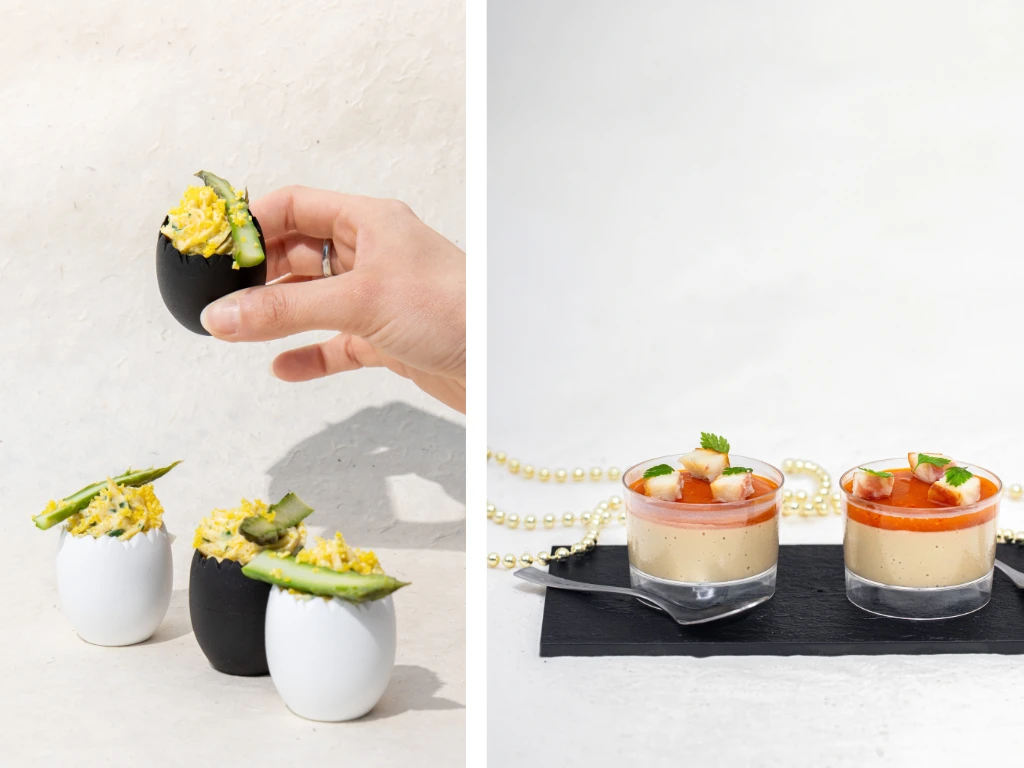
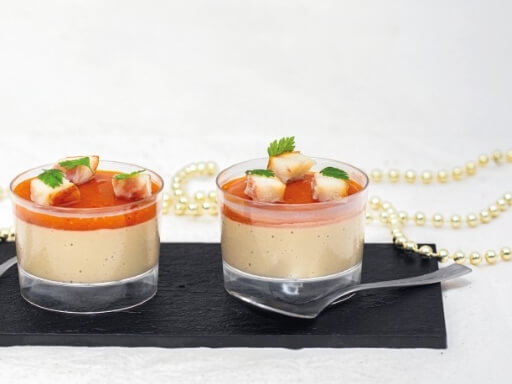
Foie gras panna cotta, smoked eel and chilli gel
A bold pairing between the melting softness of foie gras panna cotta, the smoky notes of eel and the controlled heat of chilli gel. This gastronomic creation requires an 8 to 10 cl verrine to allow harmonious layering of the three elements.
Recommended format: glass verrine of 10 cl, slightly flared shape to facilitate spoon tasting and enhance the delicate plating.
Products Shown : Chupito 5cl, Textura Mini Tray 189
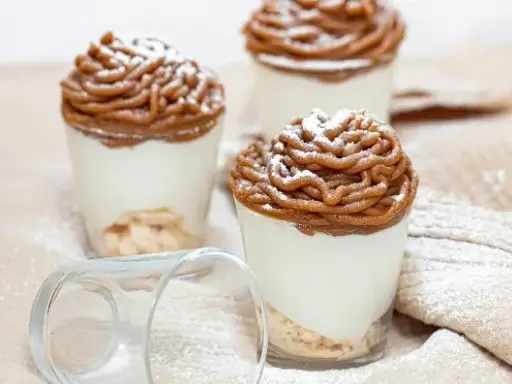
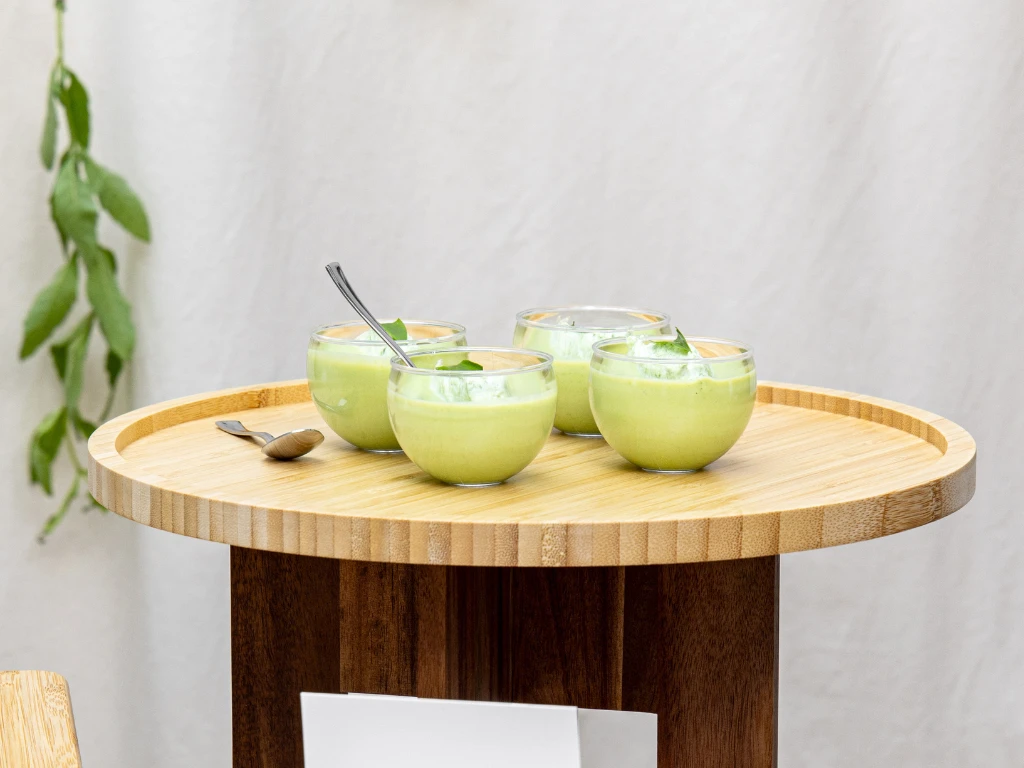
Pea cream and wild garlic chantilly
Fresh and spring-like, this recipe combines the vegetal sweetness of pea cream with the aromatic power of wild garlic chantilly. The contrast between the vivid green cream and the white chantilly creates a striking visual effect.
Recommended format: 8 cl verrine, straight cylindrical shape to showcase the clear demarcation between the two layers. Ideal for a spring buffet or Easter menu.
Products Shown : Loop 8cl , Karou Tray
Common mistakes to avoid
- Choosing a verrine too large for the preparation: a half-empty container gives an impression of stinginess. Always match the capacity to the actual volume of your recipe.
- Neglecting stability: some designer shapes are beautiful but unstable. For catering service, favour wide, stable bases.
- Ignoring thermal compatibility: not all materials withstand oven or freezer temperatures.Check specifications before preparing your recipes.
- Visual overload: too many layers or colours can reduce readability. Limit yourself to 3-4 elements maximum per verrine.
- Forgetting logistics: think about transport, storage and service. Fragile or difficult-to-stack verrines can considerably complicate your organisation.
Make the right choice to bring out the best in your creations
Choosing a serving glass is never just a matter of aesthetics. It’s a delicate balance between capacity, material, and intended use that determines the success of your presentation. A well-chosen serving glass enhances your recipe, makes serving easier, and leaves a lasting impression on your guests.
Take the time to assess your needs: what is the serving context? How much food do you want to present? What is your budget? By answering these questions, you’ll naturally gravitate toward the most suitable solution.
Don’t hesitate to test several sizes and materials before committing to a large order. Order samples, conduct plating tests, and seek feedback from your team. The perfect verrine is one that supports your creativity while meeting the operational requirements of your business.
Explore our selection of professional verrines now to find inspiration and bring your next culinary projects to life.
FAQ
1. What size glass should I choose for a cocktail reception?
For a cocktail reception, opt for 5- to 6-cl verrines. This small size allows guests to easily enjoy them while standing, using just one hand, and sample a variety of flavors. Plan on 8 to 12 verrines per person for a 2-hour cocktail reception.
2. What type of glass container is best suited for a caterer?
Polystyrene (PS) is the most commonly used material by professional caterers. Lightweight, cost-effective, and available in a wide variety of shapes, it offers excellent value for money for large-scale events. It is also transparent and has a visual appearance similar to glass.
3. Are PS cups recyclable?
Polystyrene is technically recyclable, but whether it is accepted depends on local recycling systems. More and more manufacturers are offering alternatives made from recycled plastic or bio-based materials to meet the event industry’s growing environmental requirements.
4. Which dessert glass should you choose for a restaurant dessert?
For a restaurant dessert, choose a 10- to 15-cl glass. The glass adds a touch of elegance and conveys a sense of superior quality. Flared or tulip-shaped glasses are particularly well-suited for desserts because they make it easier to scoop the dessert with a spoon and showcase the presentation.