Categories : Blog

Why has the Atlas format become a standard for buffets and caterers?

DIn the world of collective catering, event buffets and professional catering services, one name keeps coming up when discussing presentation and service: the Atlas format. This system of trays with standardised dimensions has become a true professional standard in just a few years. But why such success? What makes this format so indispensable in the daily operations of food service professionals?

This article explains in detail the origin of the Atlas format, its variations (1/1, 1/2, 1/4), its compatibility with professional equipment, and above all why it considerably simplifies the lives of caterers and buffet managers. Whether you're an experienced professional or just launching your business, you'll understand why adopting this standard is a strategic choice.

What is the Atlas format?

A standardised sizing system

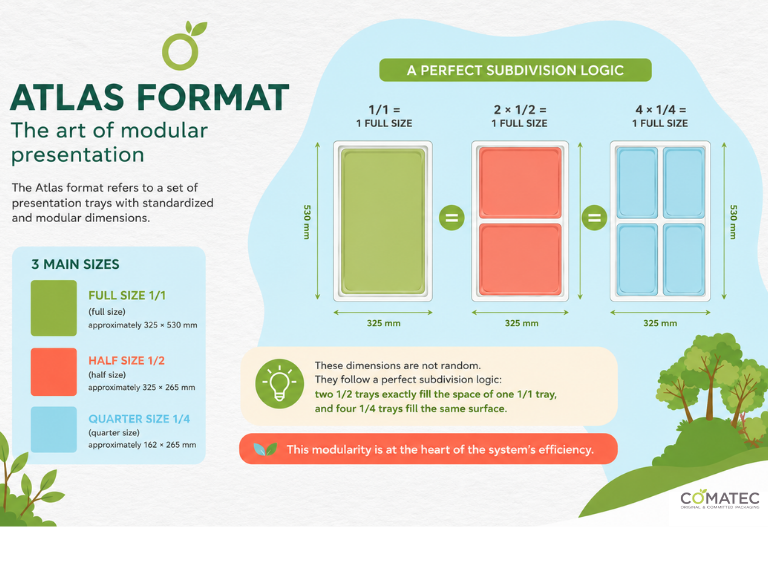
The Atlas format refers to a set of presentation trays whose dimensions are standardised and modular. There are primarily three sizes:

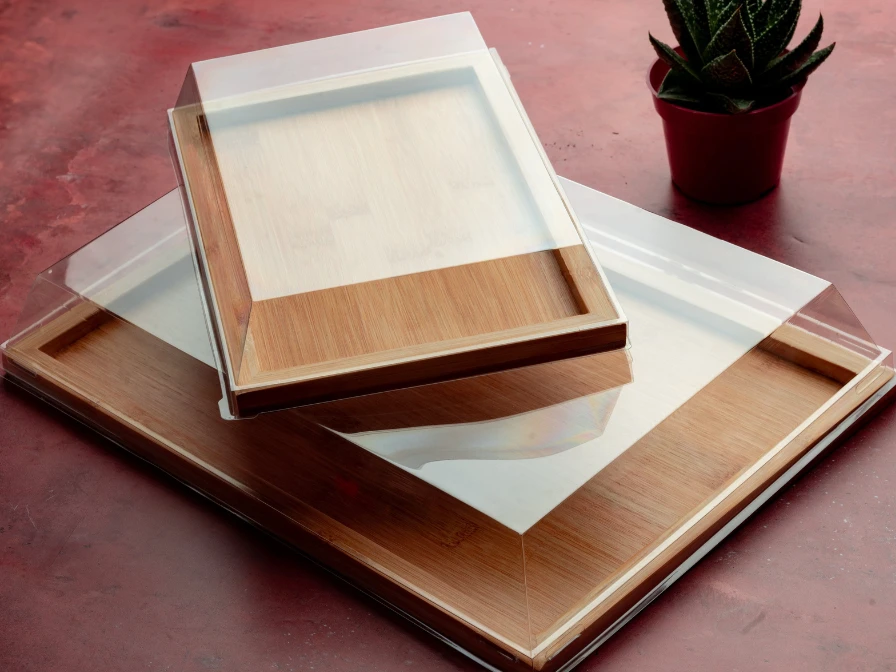
  • 1/1 format (full size): approximately 325 × 530 mm
  • 1/2 format (half size): approximately 325 × 265 mm
  • 1/4 format (quarter size): approximately 162 × 265 mm

These dimensions are not random. They follow a logic of perfect subdivision: two 1/2 trays occupy exactly the space of one 1/1 tray, and four 1/4 trays fill the same surface area. This modularity is at the heart of the system's efficiency.

A reference inspired by gastronorm standards

The Atlas format draws direct inspiration from gastronorm containers (GN standard), an international standard used throughout professional catering since the 1960s. The gastronorm standard, defined by European standard EN 631, sets precise dimensions for professional kitchen containers.


The Atlas format adapts this logic to presentation trays, maintaining the principle of modularity and interchangeability. The goal is the same: to allow any professional to equip themselves with the certainty that their containers will be compatible with each other and with their existing equipment.

Standardised dimensions: a major advantage for professionals

Standardisation that simplifies purchasing

When a caterer or buffet manager needs to replenish their tray stock, the Atlas format guarantees total compatibility with existing equipment. No need to measure, compare, or risk an unsuitable purchase. 

Standardised dimensions eliminate uncertainty.

Des dimensions pensées pour l'ergonomie

The dimensions of the Atlas format don't just follow mathematical logic. They have been designed to be ergonomic:

  • The 1/1 format is large enough to present a variety of products but remains manageable by one person.
  • The 1/2 format is ideal for one-handed carrying, allowing service staff to replenish a buffet quickly.
  • The 1/4 format is perfect for small quantities, canapés or accompaniments.

Compatibility with display cases, trolleys and buffets

Perfect integration in refrigerated display cases

Manufacturers of professional refrigerated display cases design their equipment with the Atlas format in mind. Grilles, supports and shelves are sized to accommodate 1/1, 1/2 or 1/4 trays with no wasted space.

This means a caterer can switch display cases, change equipment suppliers, or expand their fleet without ever encountering compatibility issues. It's a considerable saving in time and money over the long term.e.

Optimised transport trolleys

The transport trolleys used in collective catering and events are also designed for the Atlas format. Guide rails, level spacing and internal dimensions correspond exactly to the standardised trays.

The result: a trolley can be loaded quickly, with no wasted space, and trays remain stable during transport. For a caterer delivering 200 covers to a reception venue, this reliability is essential.

Infinitely modular buffets

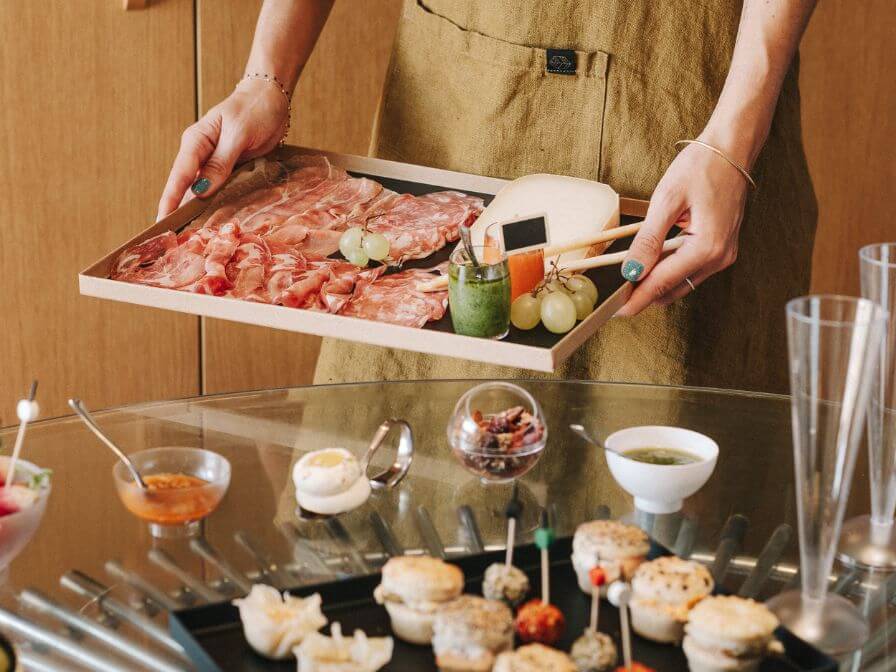
On a buffet, presentation is paramount. The Atlas format allows you to compose varied and aesthetic arrangements:

  • A 1/1 tray in the centre for the centrepiece
  • Two 1/2 trays on either side for accompaniments
  • 1/4 trays at the periphery for condiments and canapés

All these elements align perfectly, creating a professional and harmonious presentation without any special setup effort. Lines are straight, spaces are optimised, and the buffet exudes organisation.le buffet respire l'organisation.

Space optimisation: every centimetre counts

In kitchens and cold rooms

Storage space is a scarce commodity in any professional kitchen. Thanks to the modularity of the Atlas format, trays are stored without wasted space. You can stack identical formats or combine complementary formats to occupy 100% of the available surface.

In cold rooms, this space optimisation is even more critical. Every square centimetre has an energy cost. Trays that fit perfectly on shelves allow you to store more preparations without increasing the cold room's volume.

During transport

A delivery vehicle also has limited volume. Atlas trays, thanks to their standardised dimensions, allow you to maximise loading. A caterer can thus:

  • Reduce the number of trips needed
  • Lower transport costs
  • Guarantee the stability of preparations during transit

Over a full year, the savings in fuel and delivery time alone justify the investment in Atlas format equipment.

At the reception venue

Once on site, the Atlas format simplifies setup. Standard buffet tables (120 cm, 150 cm or 180 cm in length) accommodate a precise number of Atlas trays. Staff know exactly how many trays to place per table, without having to improvise.

This predictability is an enormous advantage at events where setup time is limited. Every minute saved is a minute invested in service quality.

Service organisation: fluidity and professionalism

Simplified advance preparation

The Atlas format allows trays to be prepared in the kitchen well before the event. Thanks to associated lids, preparations are protected and ready for transport. On the day, you simply remove the trays, take off the lids and arrange everything on the buffet.

This working method, called "advance production", has become the norm among professional caterers. It allows the workload to be spread over several days and reduces stress on the day of the event.

Quick and discreet replenishment

During an event, dishes empty and need to be replaced. With the Atlas format, replenishment takes just seconds: remove the empty tray, replace it with a full tray prepared backstage. The action is quick, clean and virtually invisible to guests.

This tray rotation system guarantees a buffet that is always stocked and appetising, without service interruption or visual clutter.

Facilitated traceability

Within the framework of HACCP regulations (Hazard Analysis Critical Control Point), caterers must ensure traceability of their preparations. The Atlas format, thanks to its standardisation, facilitates labelling and batch tracking. Each tray can receive a label indicating:

  • Date of manufacture
  • Use-by date
  • Allergen list
  • Storage conditions

This rigour is not only legally mandatory but also reinforces client confidence.

Associated lids: protection and practicality

Perfectly fitted lids

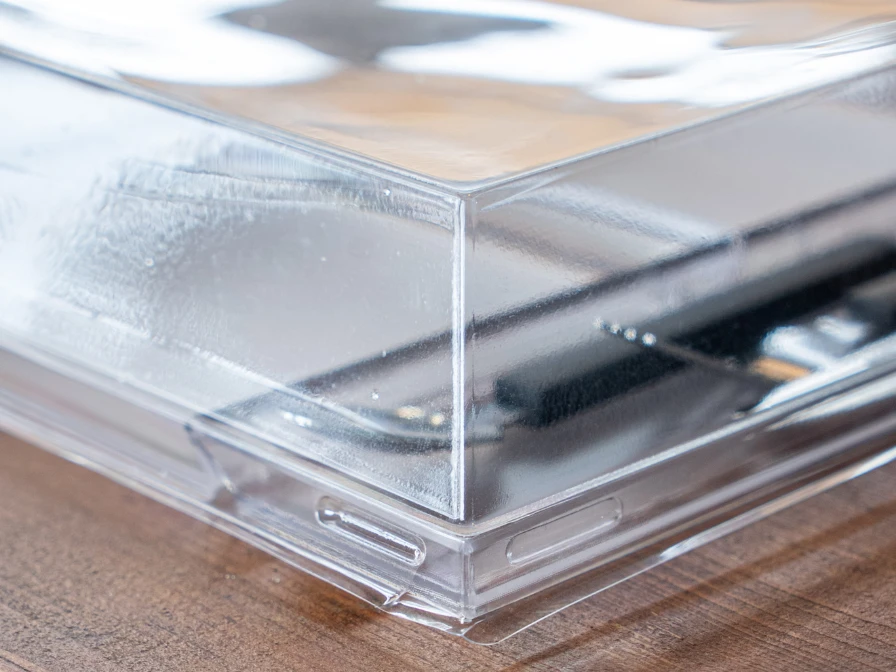
One of the often underestimated advantages of the Atlas format lies in its associated lids. Designed with the same dimensions as the trays, they fit precisely and provide an airtight or semi-airtight seal depending on the model.

Lids are available in different materials:

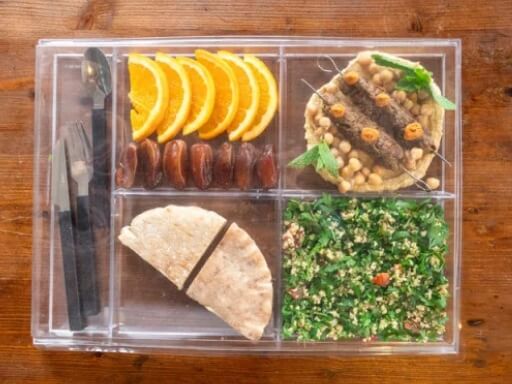
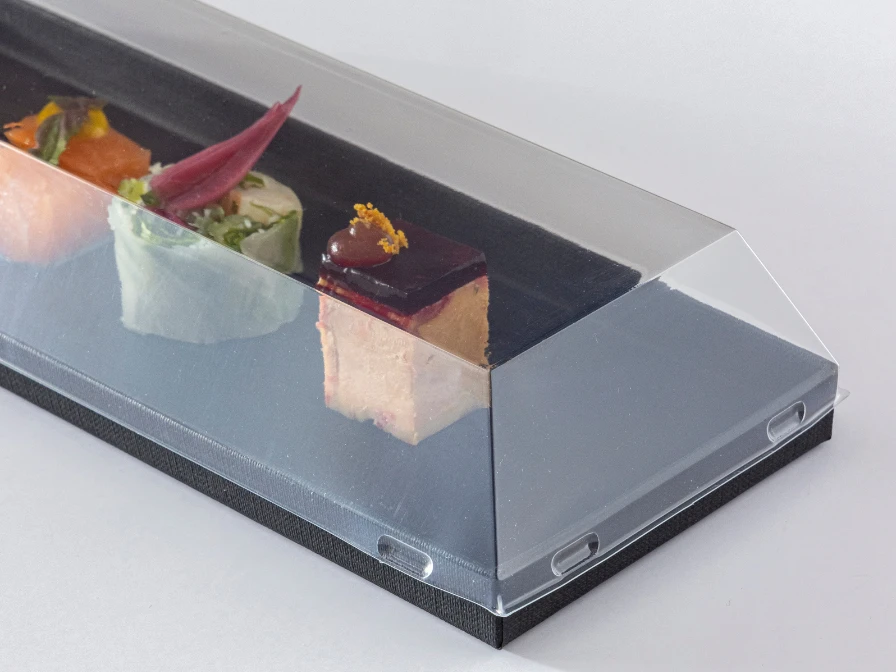
  • Transparent lids: ideal for viewing contents without opening, perfect for display cases
  • Opaque lids: for storage and transport
  • Hinged lids: practical for self-service

Sanitary protection and preservation

Lids protect preparations against:

  • Cross-contamination in cold rooms
  • Food dehydration
  • Splashes and dust during transport
  • Temperature variations during prolonged display

For a caterer, this protection is synonymous with guaranteed quality right up to the moment of service.

Stackability and space saving

Lids allow trays to be stacked without crushing preparations. This stackability is essential during transport and cold room storage.

A transport trolley can thus accommodate 15 to 20 stacked trays with lids, equivalent to a complete buffet for 100 people, in a reduced volume.

Why adopt the Atlas format in 2026?

A profitable long-term investment

The Atlas tray represents a moderate initial investment that pays for itself very quickly thanks to:

  • Its durability (resistant professional materials)
  • Its versatility (usable for preparation, storage, transport and presentation)
  • Its universal compatibility (no risk of obsolescence)

To discover the complete range and choose the formats suited to your business, browse our selection of professional Atlas trays.

A response to current market demands

In 2026, client expectations regarding presentation and hygiene have never been higher. The Atlas format meets these demands by offering:

  • Polished and professional presentation
  • Impeccable traceability
  • Optimal hygiene thanks to lids
  • Adaptability to all types of events (weddings, seminars, cocktail parties, corporate buffets)

A standard recognised by the entire profession

Today, hospitality schools, training organisations and catering consultants systematically recommend the Atlas format. It has become a prerequisite in collective catering tenders and a mark of professionalism in the eyes of event clients.

Not using the Atlas format means marginalising yourself in a sector where standardisation is synonymous with efficiency and professionalism.

Common mistakes to avoid

Mixing incompatible formats

Some professionals, seeking to save money, buy trays of approximate dimensions from non-specialist suppliers. The result: trays don't align on the buffet, don't fit in trolleys and lids don't adjust correctly. This false economy is costly in terms of image and operational efficiency.

Neglecting lids

Buying Atlas trays without investing in the corresponding lids means missing half the system's advantages. Lids are essential for transport, storage and preservation. Plan for at least one lid per tray.

Underestimating quantity needs

To ensure smooth service with tray rotation, you need at least two complete sets: one in service on the buffet and one being prepared backstage. Allow generous margins so you're never caught short.

The Atlas format: an obvious choice for demanding professionals

The success of the Atlas format is no accident. It results from intelligent design that precisely meets the operational needs of buffet and catering professionals: standardised dimensions, universal equipment compatibility, optimisation of every centimetre of space, smooth service organisation and effective preparation protection thanks to lids.

By adopting this standard, you join a community of professionals who have chosen efficiency and quality. Whether you're starting your catering business or looking to streamline your operations, the Atlas tray is an investment that pays for itself from the very first use.

Take the step towards standardisation. Your team, your clients and your bottom line will thank you.


FAQ

What is the difference between the Atlas format and the gastronorm format?

The gastronorm format (GN) refers to cooking and storage containers used in professional kitchens. The Atlas format applies the same logic of standardised, modular dimensions specifically to presentation trays designed for dining room service, buffets and display cases. The two systems are complementary but serve different purposes.

Are Atlas trays compatible with all professional trolleys?

Yes, the vast majority of professional transport and service trolleys are designed to accommodate Atlas format trays. Before purchasing, simply check that the trolley manufacturer mentions compatibility with 325 × 530 mm dimensions (1/1 format).

Are Atlas lids dishwasher safe?

Most Atlas lids made from food-grade plastic or polycarbonate are compatible with professional dishwasher cleaning. However, check the manufacturer's recommendations regarding maximum wash temperature, particularly for transparent lids which may warp at very high temperatures.