


Categories : Blog

Catering presentation tray: How to choose between wood, cardoard and PS ?

Natural wood, elegant kraft cardboard, crystal-clear polystyrene… When it comes to catering presentation trays, choosing the right material is far from trivial. This support, often seen as a simple logistical accessory, actually plays a strategic role: it influences the perceived quality of your services, determines the practicality of your operations and reflects your environmental commitment.

Faced with the diversity of materials available on the market, how do you find your way? Which material should you prioritise depending on the type of event, order volume or brand positioning? At COMATEC, we support catering and foodservice professionals with a comprehensive range of trays available in wood, cardboard and polystyrene (PS).

In this article, we review each material in detail, analyse their advantages and limitations, explain the available formats (1/1 and 1/2) and give you all the keys to make an informed decision tailored to your business.

Why is the choice of presentation tray so important?

A direct impact on brand image

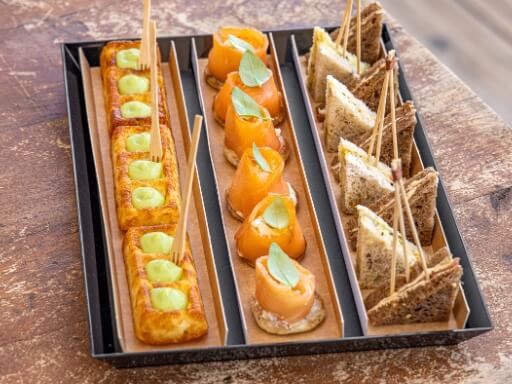
In catering and foodservice, the first impression is decisive. Before even tasting a canapé or a verrine, your client observes the presentation. The presentation tray is the first showcase for your culinary creations. A well-designed tray, in harmony with your offering, sends a strong signal of professionalism and quality.

Conversely, an unsuitable support too fragile, dull or poorly sized  can undermine impeccable culinary work.

Practicality and service logistics

Beyond aesthetics, the tray must meet concrete operational requirements: 

  • Strength: can it support the weight of preparations without deforming?
  • Stackability: is it easy to store and transport?
  • Compatibility: does it comply with gastronorm (GN) standards for seamless integration into your workflow?
  • Waste management: is it disposable, recyclable or reusable?

The eco-responsible dimension

In 2026 and beyond, the environmental question is unavoidable. Your clients  individuals and businesses alike  are increasingly sensitive to the ecological footprint of their events.

Choosing an eco-friendly tray (recyclable, compostable, sourced from renewable resources) can become a genuine commercial argument.

The three main materials: wood, cardboard and polystyrene

Let's get to the heart of the matter. Here is a detailed overview of the three main materials used for catering presentation trays.

Wood and bamboo trays: premium authenticity

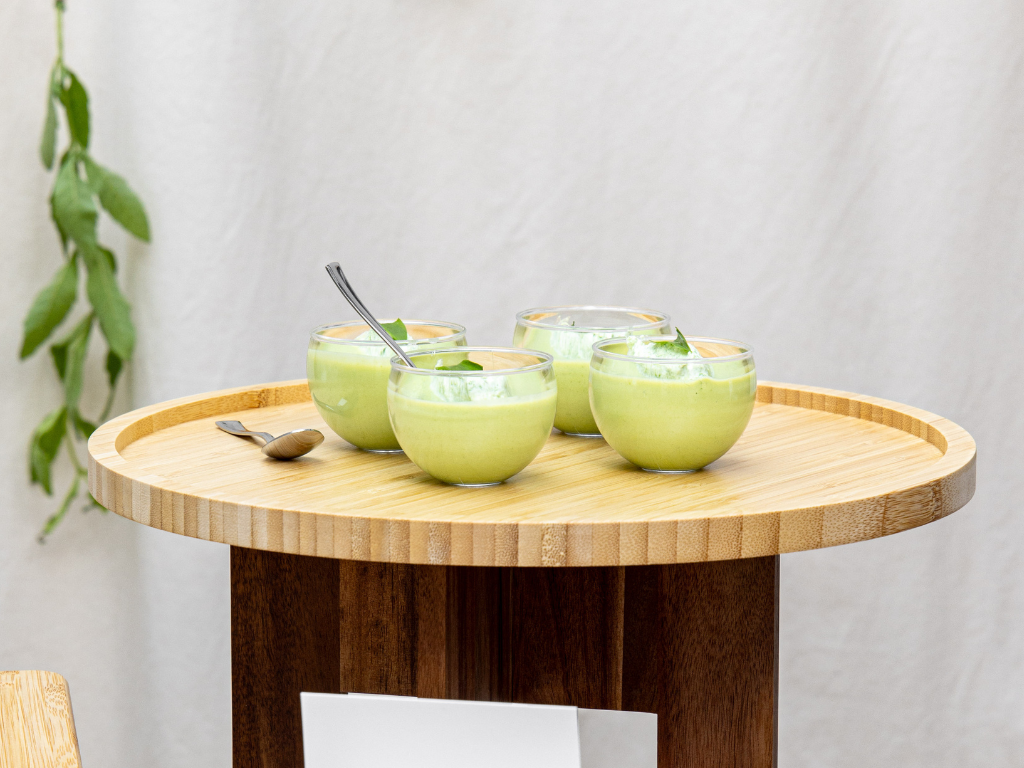
Karou tray
Madera tray
Hopla tray

Features and advantages

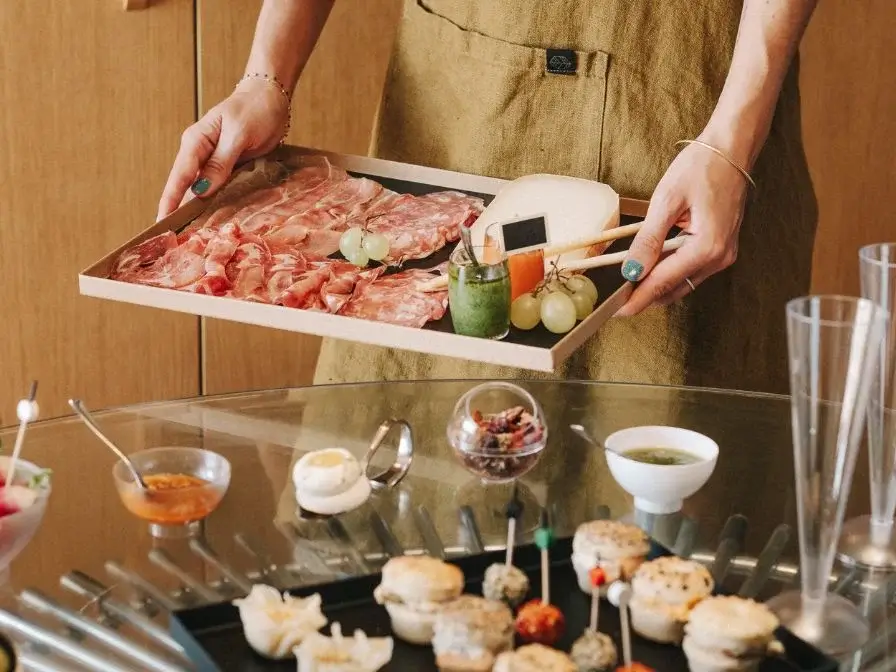
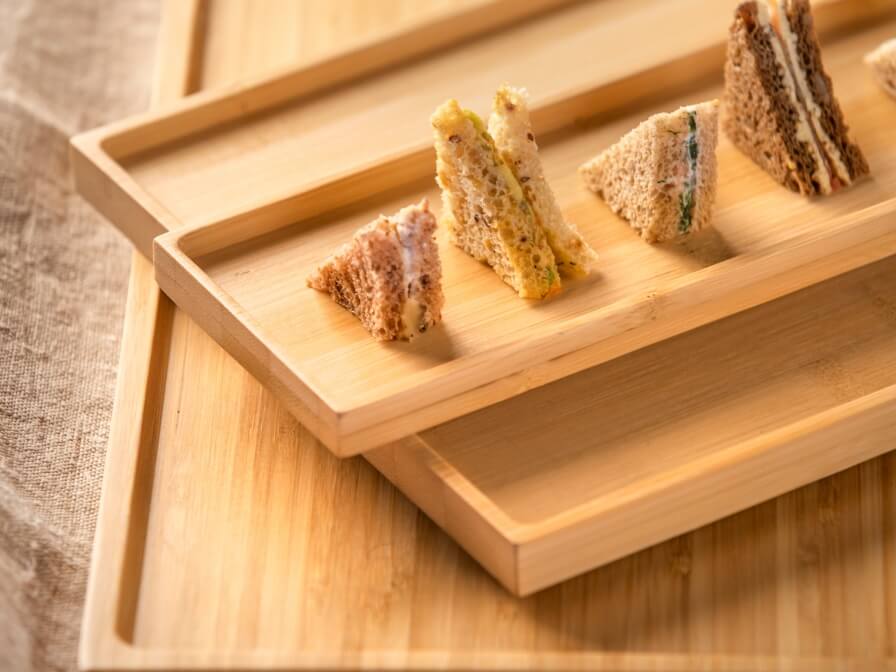
Wood and bamboo embody the natural, warmth and authenticity. These noble materials immediately lend a premium feel to your presentations. Bamboo, in particular, benefits from a very positive image thanks to its rapid growth and sustainability.

Key advantages of wood or bamboo trays:

  • Natural, warm aesthetic: ideal for rustic buffets, high-end receptions or cheese and charcuterie presentations.
  • Robustness: excellent mechanical resistance with no risk of deformation.
  • Eco-responsible image: natural, renewable and biodegradable material.
  • Versatility: suitable for both service and display presentations. Each tray has its matching lid.

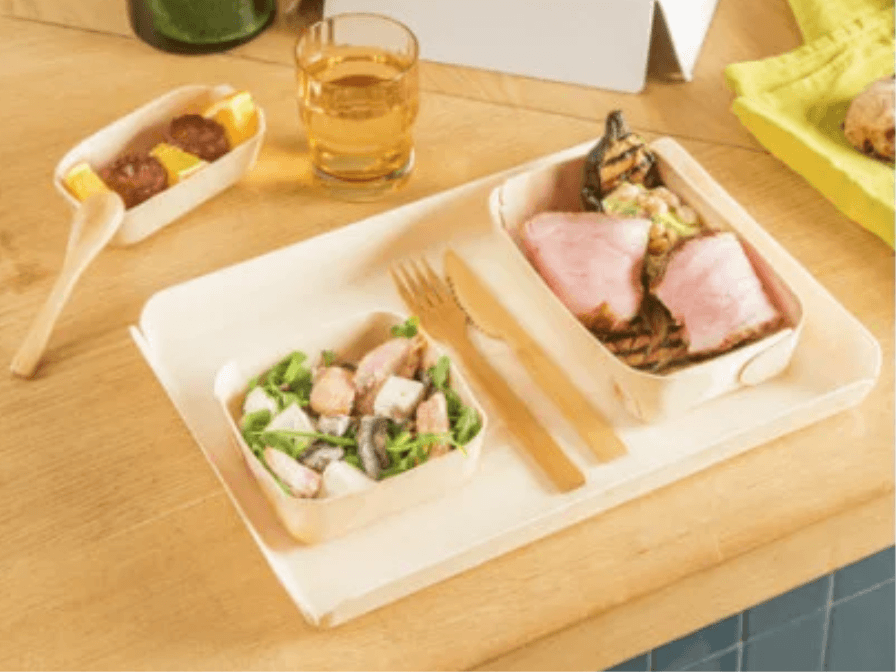
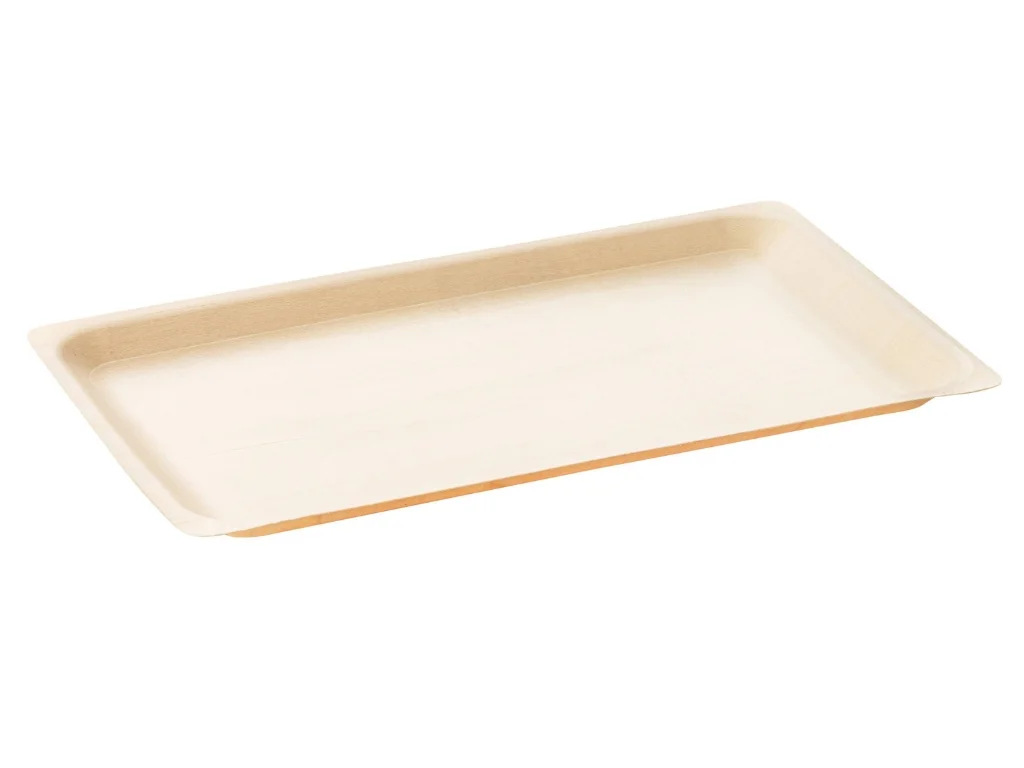
At COMATEC, the Madera 309 tray made from poplar wood and coated with greaseproof paper perfectly illustrates the balance between natural appeal and practicality. Grease-resistant and food-contact safe, it pairs with a transparent RPET lid for easy transport and presentation. For a round format, also discover the Karou bamboo Ø320 tray, perfect for circular buffets.

Limitations to consider

Wood and bamboo are not free of drawbacks:

  • Higher unit cost: this is the most expensive material among the three options.
  • Weight: wooden trays are heavier, which can complicate transport in large quantities.
  • Maintenance: wood requires particular attention in terms of hygiene.

Best suited for

The wooden or bamboo tray is particularly recommended for:

  • Premium events (weddings, galas, high-end corporate receptions)
  • Caterers positioned in the luxury or artisanal segment
  • Presentations of terroir products (cheeses, charcuterie, breads)
  • Restaurant concepts that value the natural and authentic

Cardboard trays: versatility and value for money

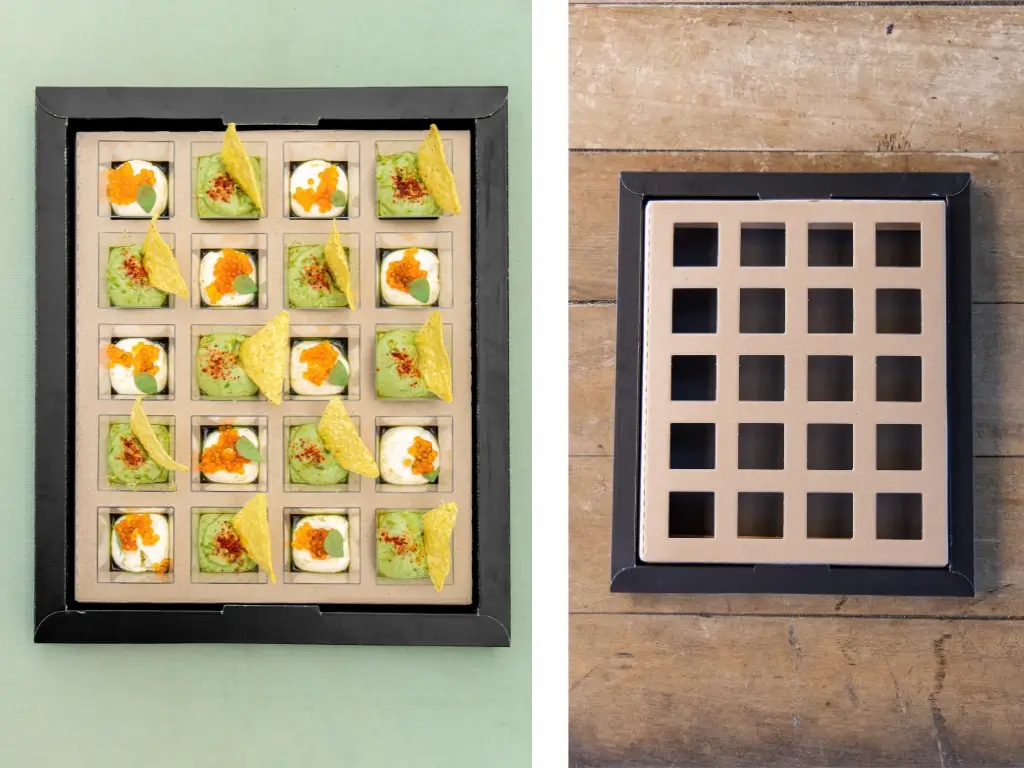
20 perforation Thema wedge
Thema Kraft Mealtray base + lid
Kraft/Black Caterlux tray Atlas 1/2

Features and advantages

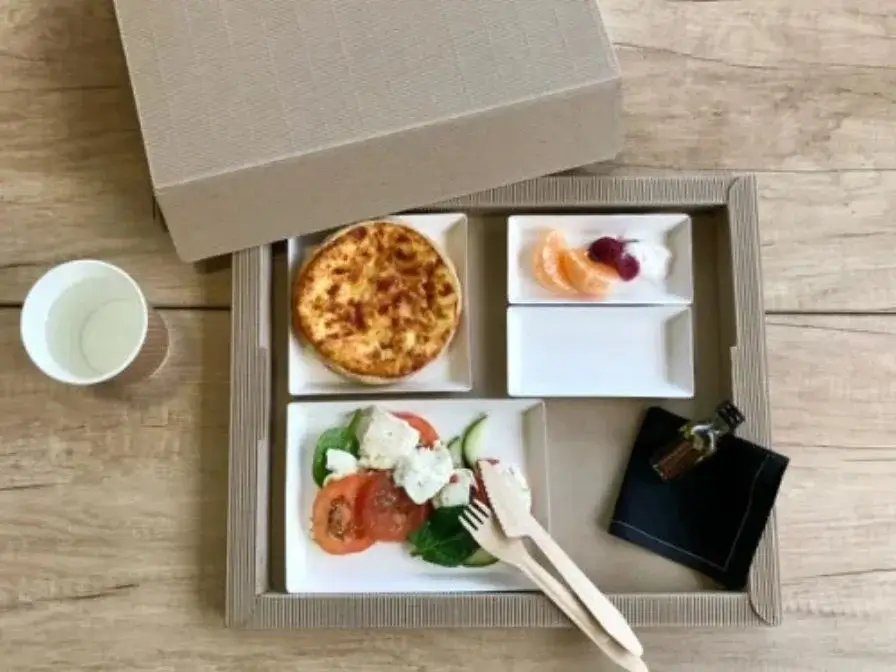
The cardboard tray has evolved considerably in recent years. Far from the basic image one might attribute to it, modern cardboard trays offer refined finishes  kraft, black, textured that rival more noble materials.

Advantages of cardboard trays:

  • Unbeatable value for money: the most economical solution, ideal for high-volume services.
  • Lightness: facilitates transport and handling.
  • Recyclability: cardboard is one of the most easily recyclable materials.
  • Variety of finishes: natural kraft, matte black, two-tone… Each tray has its matching lid.
  • Customisation potential: cardboard lends itself well to printing and branding.

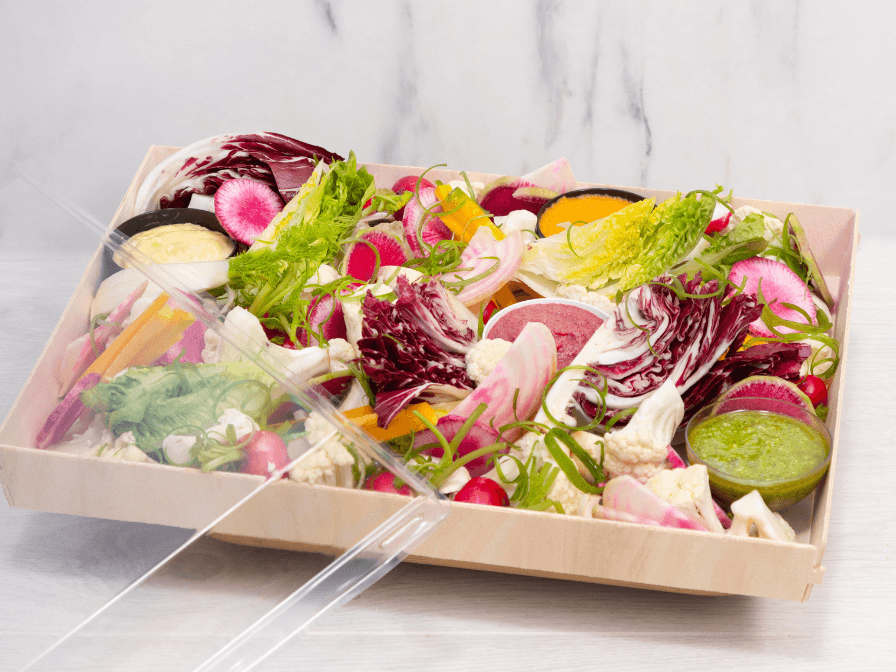
The Caterlux straight edge Atlas 1/1 kraft/black tray perfectly illustrates this upmarket evolution of cardboard. For half-gastronorm formats, the Hopla Atlas 1/2 tray offers a compact and practical solution.

For half-size portions, the Caterlux Blanc Atlas 1/2 tray offers a compact and practical solution, ideal for segmented buffets or individual deliveries.

Limitations to consider

  • Moisture resistance: Cardboard remains susceptible to liquids. For very wet items, it is best to use a tray with a surface treatment or waxed paper for protection.

  • Limited lifespan: Cardboard is designed for single-use only. It cannot withstand repeated use.

  • Moderate mechanical strength: For heavy loads, opt for thick or reinforced cardboard.

In this regard, the Natural Atlas 1/2 tray with waxed paper provides a practical solution to the issue of moisture. The integrated waxed paper protects the cardboard and offers a clean, hygienic surface for your food preparations.

What is it used for?

    The cardboard tray is ideal for:

    • High-volume catering services (corporate cocktails, seminars)
    • Meal tray deliveries
    • Caterers looking to control packaging costs
    • Eco-responsible strategies focused on recycling

    Polystyrene (PS) trays: transparency and product enhancement

    World Capitales tray
    5 cell Cubik Atlas tray 1/1
    Black Cubik Atlas tray 1/2

    Features and advantages

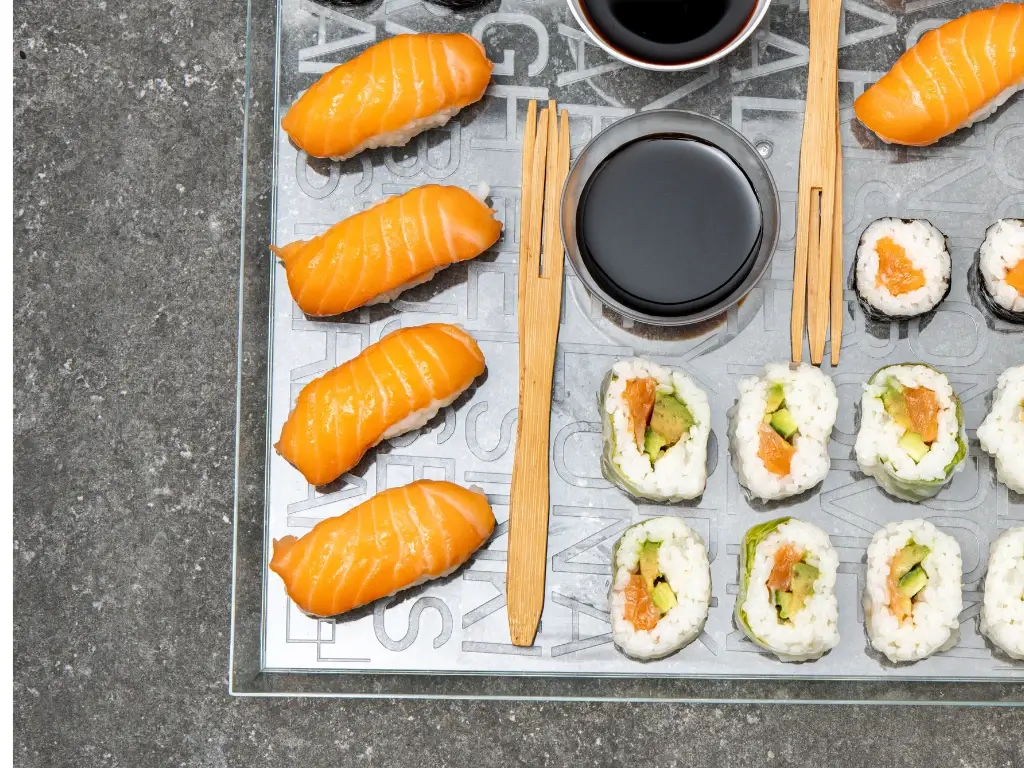
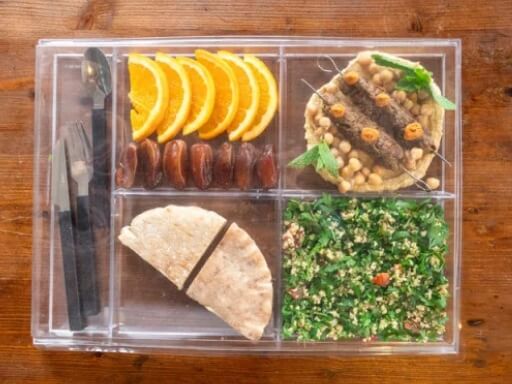
    Polystyrene (PS) offers a radically different approach. Its main strength? Transparency. Crystal PS trays showcase preparations with maximum visibility, creating a particularly attractive window effect. A perfectly fitted lid accompanies every tray for simple, secure transport.

    Advantages of polystyrene trays:

    • Transparency and clarity: crystalline effect that enhances food colours and textures.
    • Extreme lightness: even lighter than cardboard.
    • Moisture resistance: unlike cardboard, PS is unaffected by juices, sauces or condensation.
    • Controlled cost: priced between cardboard and wood.
    • Modern, professional appearance: the PS Crystal adds a contemporary, minimalist touch.

    The Cubik Atlas 1/2 crystal tray is an excellent representative of this category. Its geometric design and transparency make it an ideal choice for modern buffets and for displaying desserts or verrines. 

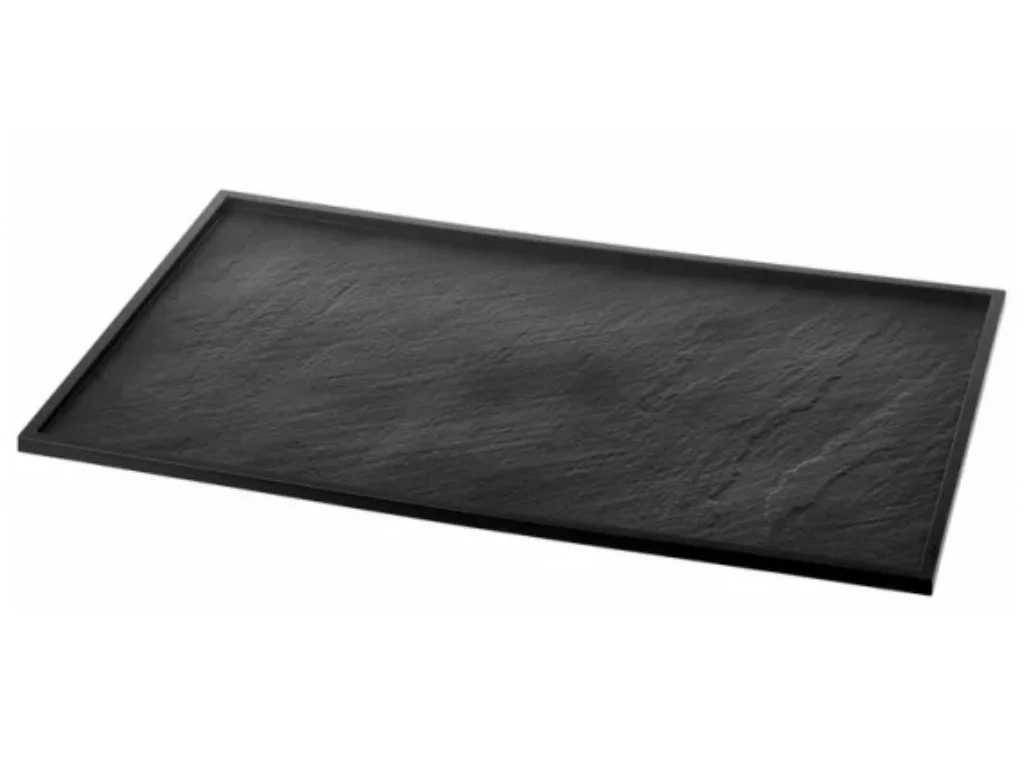
    For a more classic look in full-size format, the Cubik Black Atlas 1/1 tray offers a neutral and versatile base, while the Atlas Textura 1/2 Black tray provides an elegant, textured finish in half-gastronorm size.

    Limitations to consider

    • Environmental perception: although PS is recyclable through certain channels, it remains associated with plastic in the public eye.
    • Impact fragility: crystal PS can crack or break with rough handling.
    • Not compostable: unlike wood or certain cardboards.

    Best suited for

    The polystyrene tray is particularly suitable for:

    • Verrine, petit four and dessert presentations
    • Cold buffets and cocktail events
    • Bakery-patisserie and catering displays
    • Services requiring moisture resistance
    • Modern, minimalist presentation concepts

    Understanding formats: GN 1/1 and GN 1/2

    What is the gastronorm format?

    The gastronorm (GN) format is an international standard used in professional foodservice. It defines the dimensions of containers, trays and accessories to ensure universal compatibility with kitchen equipment (ovens, refrigerators, trolleys, display cabinets…).

    The two most common formats for catering presentation trays are:

    • GN 1/1 (full format): approximately 530 × 325 mm. The reference format, offering the largest presentation surface.
    • GN 1/2 (half format): approximately 325 × 265 mm. A more compact format, ideal for segmented presentations or individual orders.

    When to choose GN 1/1?

    The 1/1 format is preferred in the following situations:

    • Large buffets with numerous items
    • High-volume events (weddings, galas)
    • Variety on a single tray
    • Compatibility with standard GN trolleys and display cabinets
    TEXTURA GN TRAY 1/1

    When to choose GN 1/2?

    The 1/2 format proves to be relevant for:

    • Individual deliveries (meal trays)
    • Segmented buffets (sweet/savoury, allergens)
    • Reduced spaces
    • Flexibility: two 1/2 trays combine to form a 1/1
    TIMMERA GN TRAY 1/2

    Comparative table of the three materials

    To help you visualize the differences at a glance, here is a summary comparison:

    CriterionWood / BambooCardboardPolystyrene (PS)
    Aesthetics★★★★★ Natural, premium★★★★ Varied, modern★★★★ Crystal-clear, sleek
    Mechanical resistance★★★★★ Excellent★★★ Fair★★★ Good (fragile to impact)
    Moisture resistance★★★★ Good★★ Low (unless treated)★★★★★ Excellent
    Lightness★★ Heavy★★★★★ Very light★★★★★ Very light
    Unit cost€€€ High€ Economical€€ Mid-range
    Environmental impact★★★★★ Biodegradable★★★★ Recyclable★★★ Recyclable (specific stream)
    Ideal forPremium eventsVolume, deliveriesVerrines, desserts, displays

    How to choose: the decisive criteria

    1. Define your positioning

    Your tray choice should be consistent with your brand image. A gourmet caterer focused on luxury will prioritise wood or bamboo. A high-volume event caterer will naturally opt for cardboard.

    A pâtissier wanting to showcase colourful creations will turn to crystal PS.

    2. Analyse the type of event

    • Rustic wedding → wood tray, natural and elegant ambiance
    • Corporate seminar (100+ people) → cardboard tray, optimal volume/price ratio
    • Trendy cocktail party → crystal PS tray, modern and transparent
    • Meal tray delivery → cardboard with greaseproof paper, light and functional

    3. Evaluate logistical constraints

    • How many trays do you need to transport simultaneously?
    • Do you have sufficient storage space?
    • Are your preparations wet or dry?
    • How long will the trays remain on display?

    The answer to these questions will naturally guide your choice towards the most suitable subject.

    4. Consider eco-responsibility

    More and more clients integrate environmental criteria into their decisions. Communicating your choice of a recyclable or biodegradable tray can make the difference against a competitor.

    Common mistakes to avoid

    Common mistakes to avoid

    Here are the most common pitfalls we observe among catering professionals:

    • Undersizing the tray: a tray that's too small forces overcrowded presentations.
    • Ignoring gastronorm compatibility: non-GN trays complicate integration with your equipment.
    • Neglecting moisture protection: placing wet preparations on unprotected cardboard is a classic error.
    • Choosing solely on price: the cheapest tray isn't always the most cost-effective.
    • Not testing before ordering in bulk: always order a sample to verify compatibility with your preparations, logistics and aesthetics.

    Combining materials: a winning strategy

    Who said you have to choose just one material? The savviest caterers intelligently combine supports depending on the context:

    • Wood for centrepiece displays: the main buffet tray that immediately catches the eye.
    • Cardboard for volume: secondary presentations, restocking, deliveries.
    • Crystal PS for desserts: transparency that showcases verrines and petit fours.

    This mixed approach lets you optimise your budget while delivering a rich and varied visual experience.

    Choose what best fits your business

    A catering display tray is more than just a disposable item: it’s an extension of your culinary expertise. Wood, cardboard, and polystyrene each offer specific advantages that meet different needs in terms of aesthetics, practicality, budget, and environmental commitment.

    In summary:

    • Choose wood or bamboo for a premium look and a natural presentation.
    • Opt for cardboard when volume, budget, and recyclability are your priorities.
    • Choose polystyrene for transparency, moisture resistance, and showcasing colorful creations.
    • And don’t hesitate to combine materials to offer your customers a complete and cohesive visual experience.

    Explore our full range of COMATEC trays and displays and find the perfect solution to showcase your catering services.

    The COMATEC range: solutions for every need

    At COMATEC, we have developed a comprehensive range of trays and display stand covering all professional requirements:

    Wood/bamboo rangeKarou bamboo GN 1/1 and Karou bamboo Ø320.

    Cardboard rangeCaterlux kraft/blackCaterlux White Atlas 1/2 and Natural Atlas 1/2 

    PS rangeCubik Atlas 1/2 crystalAtlas 1/1 Natural and Atlas Textura 1/2 black.

    All our trays are designed to meet the food contact, strength and practicality standards required by catering and foodservice professionals. Gastronorm formats ensure total compatibility with your professional equipment.

    FAQ :

    Can a cardboard tray support heavy preparations ? 

    Yes, provided you choose sufficiently thick and reinforced cardboard. COMATEC cardboard trays are designed to support the weight of standard catering preparations. For particularly heavy loads, prioritise wood or bamboo.

    Is polystyrene safe for food conatct ?

    Absolutely. The food-grade polystyrene used by COMATEC complies with European food contact regulations. It is perfectly safe for food presentation.


    Can you put a wooden tray in the fridge ? 

    Yes, wood and bamboo trays withstand refrigeration temperatures. However, avoid prolonged exposure to excessive humidity to prevent any risk of warping.


    What is the difference between GN 1/1 et GN 1/2 ?

    The GN 1/1 format (approx. 530 × 325 mm) is the full gastronorm format. GN 1/2 (approx. 325 × 265 mm) is half that size. Two GN 1/2 trays side by side equal one GN 1/1. The choice depends on the size of your presentations and your equipment.

    Are COMATEC trays recyclable?

    Cardboard trays are recyclable via the traditional paper/cardboard networks. Wooden/bamboo trays are biodegradable. PS trays are recyclable in plastic sorting systems, subject to local collection infrastructure.