


How to choose your meal tray?
Faced with a catalogue of 38 meal tray references, it's perfectly normal to feel overwhelmed. Which model suits your business? Which material should you prioritise? How many compartments do you really need for your catering offer? These questions come up systematically among catering professionals, event organisers and food service companies.
Choosing a meal tray is never trivial. It directly influences the presentation of your dishes, customer satisfaction and even your brand image. A poorly suited tray can lead to leaks, an unappetising presentation or unnecessary extra costs. Conversely, a well-chosen tray enhances your culinary work and simplifies your logistics.
In this mini-guide, we will review all the essential criteria to choose your meal tray with complete confidence. We will compare the main available ranges Thema, Quadra, Snack, Fibra, Biodine and more through a detailed comparison table. You will also discover practical tips, common mistakes to avoid and a comprehensive FAQ to answer your remaining questions.
Why is choosing the right meal tray so important?
A direct impact on the customer experience
The meal tray is the first visual element your customer discovers before even tasting the contents. According to a study published in the journal Flavour (BioMed Central), the presentation of a dish can influence up to 60% of taste perception. In other words, a meal served in an elegant, well-compartmentalised tray will be judged as better than an identical meal presented carelessly.
For caterers, contract catering companies or meal delivery services, this aspect is fundamental. Your clients associate the quality of the packaging with the quality of the contents. A well-chosen professional meal tray builds trust and encourages loyalty.
Concrete logistical and economic challenges
Beyond aesthetics, choosing a meal tray has major logistical implications:
- Transport: a tray with an airtight lid reduces the risk of spillage and contamination.
- Storage: some models are stackable, optimising space in your cold rooms or delivery vehicles.
- Microwave compatibility: not all trays can withstand heating. It's crucial to check this compatibility.
- Unit cost: depending on the range and material, the price can vary threefold. You need to find the right balance between quality and budget.
The environmental dimension
In 2025, European and national regulations impose increasingly strict constraints on single-use food packaging. Ranges such as Fibra and Biodine directly address these requirements by offering materials of plant origin or that are 100% recyclable.
Choosing an eco-responsible meal tray is no longer just an activist gesture: it's a progressive legal obligation and a powerful commercial argument with an increasingly aware clientele.
Essential criteria for choosing your meal tray
The number of compartments
This is the first criterion to consider. The number of compartments determines the type of meal you can offer:
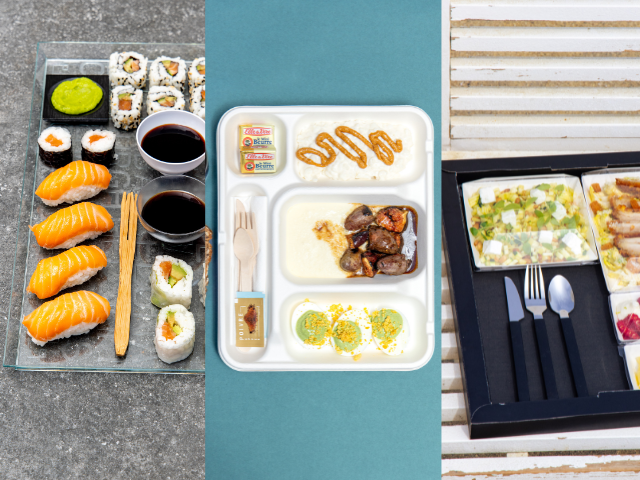
- 1 compartment: ideal for single dishes, composed salads or desserts.
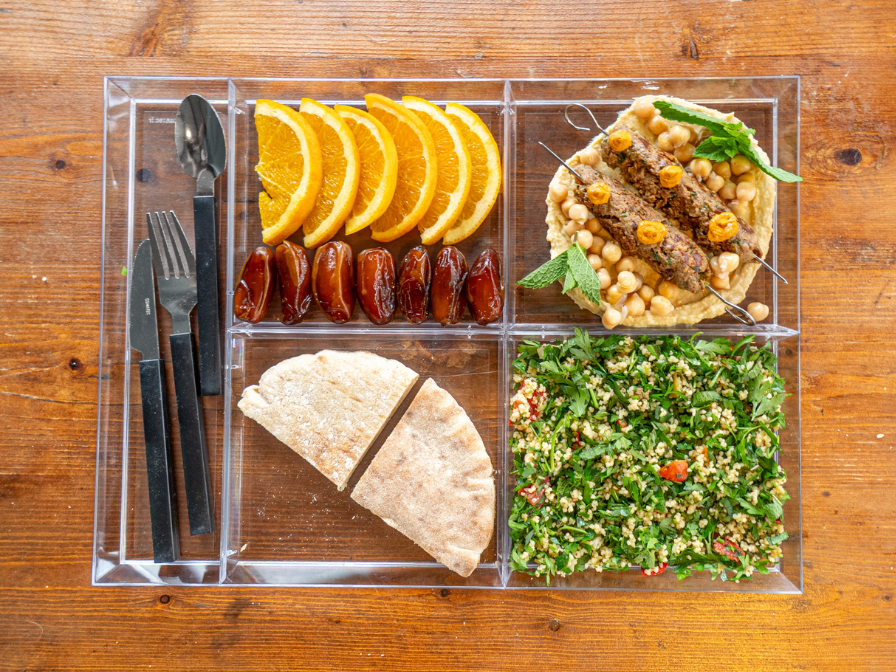
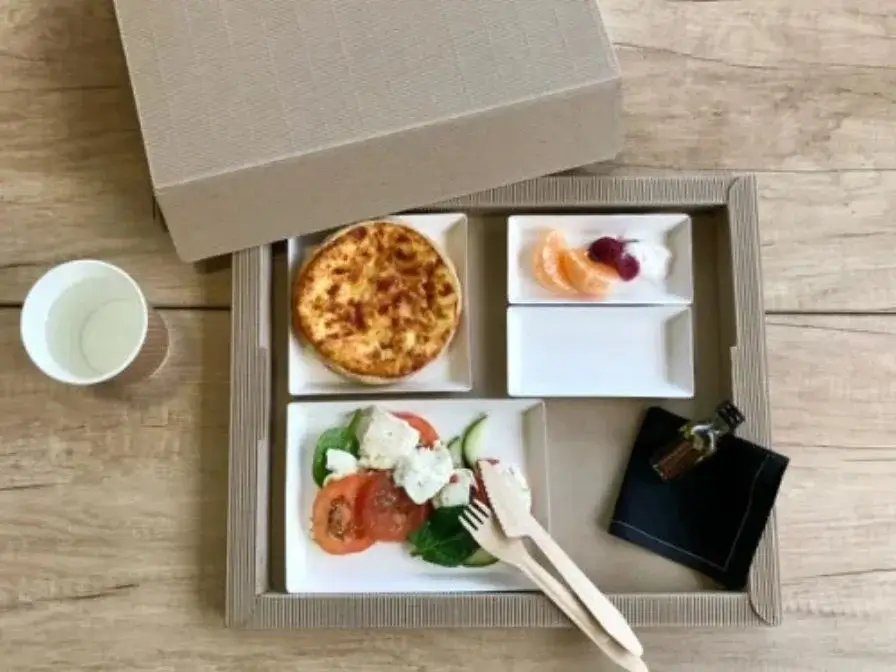
- 3 compartments: the classic starter-main-dessert format, perfect for corporate catering.
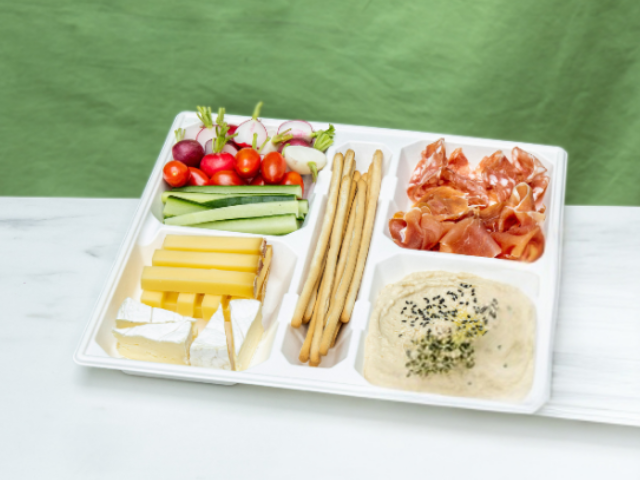
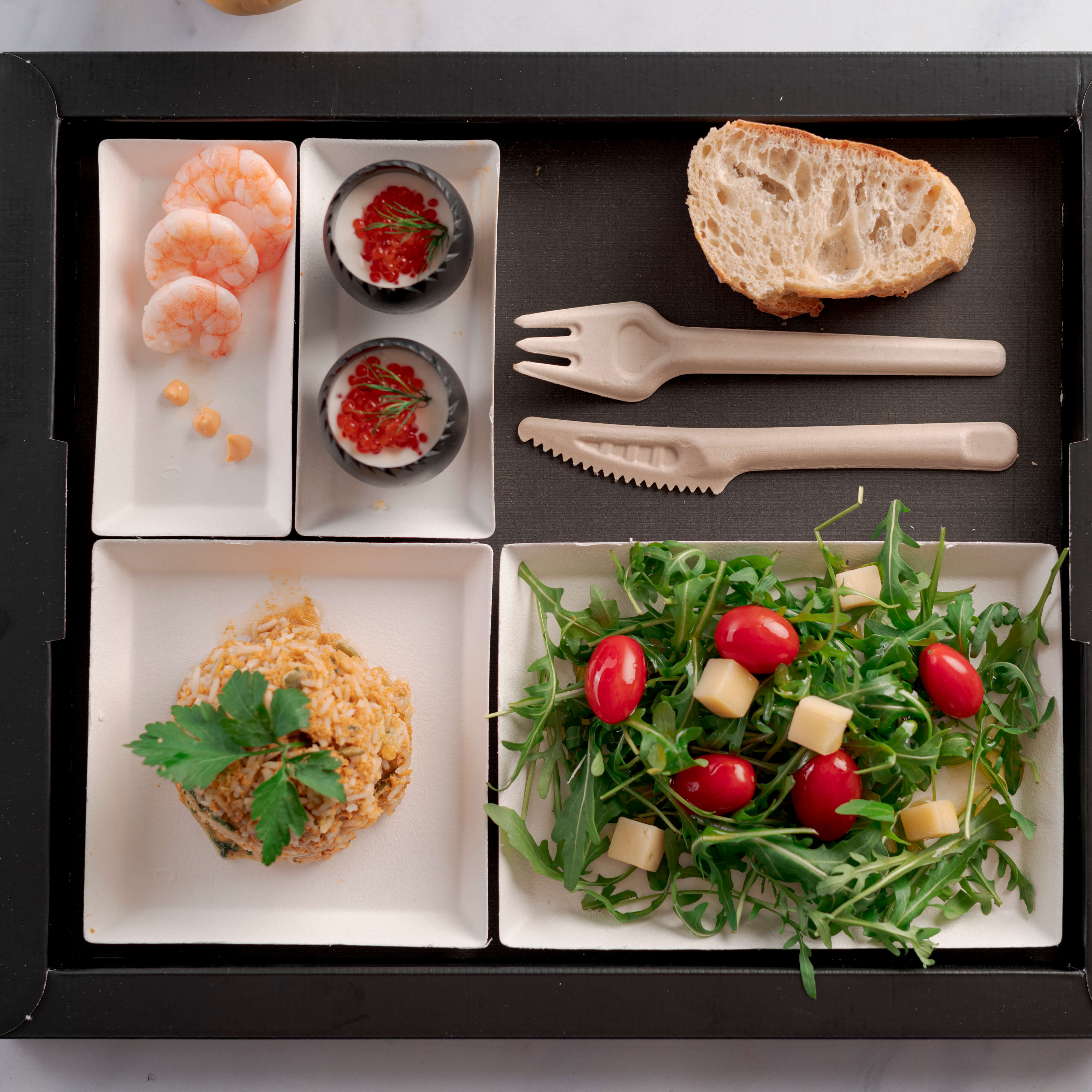
- 4 to 5 compartments: suited to complete menus with starter, main, side dish, cheese and dessert.
- 6 compartments and more: reserved for gourmet trays or premium offerings with appetisers.
The rule is simple: the more diversified your culinary offer, the more compartments you'll need. But beware a tray with too many compartments for a simple meal gives an impression of emptiness. It's better to match the format to the actual content.
The manufacturing material
The material affects the strength, appearance, weight and ecological footprint of the tray. Here are the main options available on the market:
Polystyrene (EPS): lightweight, economical, good thermal insulation. However, it is increasingly phased out due to its environmental impact and regulatory restrictions. See the PS trays
PET (Polyethylene Terephthalate): transparent, rigid, ideal for showcasing contents. Often used for lids or snacking trays. See the PET trays
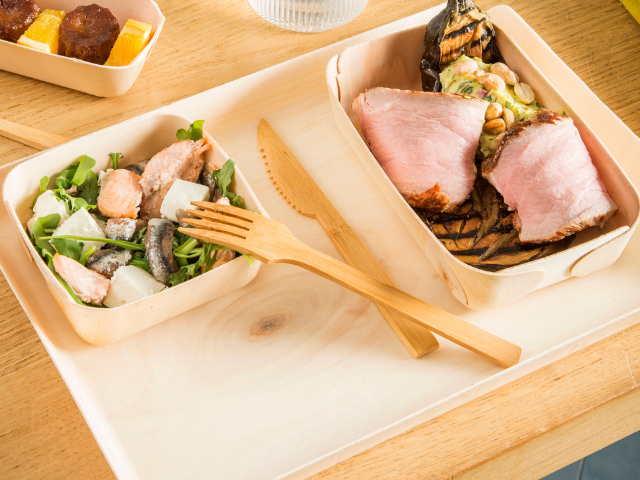
Plant fibres: kraft, sugarcane bagasse, wood fibres. These materials are compostable and fit within an eco-responsible approach. The Fibra range is an excellent example. See the Plant fibres trays
Bio-based materials: made of cardboard or palm fronds.. The Biodine range uses this type of renewable raw material. See the Bio-based materials trays
Dimensions and capacity
A tray that's too small forces food to be crammed together, which harms the presentation. A tray that's too large generates packaging waste and complicates transport. It's therefore essential to measure the portions you typically serve and compare them with tray dimensions.
Standard market formats generally range from 22 x 17 cm for compact snack models to 40 x 30 cm for large gourmet trays. In between, you'll find a multitude of intermediate sizes suited to every use.
Lid compatibility
A meal tray without a suitable lid loses much of its usefulness. The lid provides:
- Hygienic protection of food during transport and storage.
- Temperature maintenance (hot or cold depending on the model).
- An attractive presentation thanks to transparent lids that showcase the contents.
- Security when stacking trays.
Always check that the proposed lid fits the chosen tray perfectly. On the Comatec website, specialist in meal trays, each reference specifies the compatible lid, which greatly simplifies your selection.
Selection guide based on your business
You are a caterer or event organiser
Your priority: aesthetics and modularity. You need trays that showcase your culinary creations while being practical to transport on-site. The Thema range is particularly well-suited thanks to its elegant finishes, multiple compartments and microwave compatibility.
If your clientele is sensitive to environmental issues, the Fibra and Biodine ranges will provide a differentiating argument for your offer.
You manage contract catering
Volume, cost and practicality are your watchwords. You serve dozens, even hundreds of meals every day. The tray must be stackable, microwave-safe and robust enough to withstand chain handling.
The Quadra and Thema polypropylene ranges meet these requirements perfectly. Their quality-to-price ratio is excellent at high volumes.
You offer takeaway or snacking
Speed of service and convenience for the end consumer are paramount. You need lightweight trays that are easy to close and carry. The Snack range was designed exactly for this: compact formats, simple closure, very low unit cost.
You are committed to an eco-responsible approach
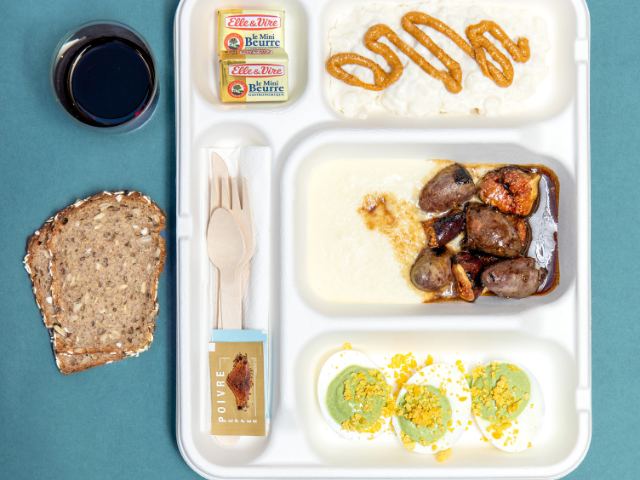
The Fibra range, made from plant fibres, and the Biodine range, based on bio-sourced materials, are your natural allies. They are compostable or derived from renewable resources, allowing you to clearly communicate your environmental commitment.
Bear in mind that these trays are generally not microwave-compatible. They should therefore be reserved for cold meals or meals reheated in a separate container.


Common mistakes to avoid
Choosing based solely on price
This is the most common mistake. A very cheap meal tray may prove fragile, incompatible with your usual lids or poorly presented. The apparent cost doesn't always reflect the real cost if you have to manage breakages, leaks or dissatisfied customer returns.
Neglecting lid-tray compatibility
Some professionals order trays and lids separately without checking their exact compatibility.
The result: lids that don't close properly, exposed food and a damaged brand image. Always check cross-references before ordering.
Forgetting to test under real conditions
Before placing a bulk order, request samples. Test the tray with your recipes, your portions and your transport conditions. A tray that looks perfect on a technical sheet may prove unsuitable in your specific operational context.
Ignoring current regulations
European regulations are progressively restricting certain materials. Don't order a large stock of expanded polystyrene trays without checking that their use is still permitted in your sector. Prioritise ranges that comply with the latest standards.
2026 meal tray market trends
The food packaging market is evolving rapidly. Here are the key trends shaping the meal tray market in 2026:
The rise of compostable materials
Driven by regulation and consumer demand, trays made from plant fibres and bio-based materials are gaining market share every year. Manufacturers are investing heavily in R&D to improve the strength and thermal compatibility of these materials.
The growth of personalised meal trays
More and more caterers and corporate restaurants want to place their logo and colours on trays. This trend strengthens brand identity and creates a more premium experience. Digital printing techniques now allow customisation even on small volumes.
The digitalisation of ordering
Online catalogues with advanced filters greatly facilitate selection. The Comatec website allows you to browse through its 38 references with precise filtering criteria, speeding up your decision-making process.
The search for “plastic-free” solutions
While polypropylene remains widely used for its technical performance, many foodservice professionals are actively looking for plastic-free alternatives. Hybrid solutions combining recycled cardboard and bio-based films offer an attractive balance between functionality and environmental commitment.
FAQ
1. Which meal tray should I choose for corporate meal delivery?
For corporate meal delivery, choose a polypropylene tray from the Thema or Quadra range with 3 to 5 compartments. These trays are durable, stackable, microwave-safe and fitted with airtight lids that secure transport. Their professional design is perfectly suited to the corporate environment.
2. Are plant fibre meal trays strong enough?
Yes, plant fibre trays such as those in the Fibra range have evolved considerably in recent years. They can withstand wet food and sauces for several hours without deforming. However, they are not suitable for microwave use.
3. Can you reheat a meal tray in the microwave?
It depends on the material. Polypropylene (PP) trays from the Thema and Quadra ranges are microwave-safe. However, PET, plant fibre (Fibra) or bio-based (Biodine) trays should generally not be microwaved. Always check the compatibility symbol on the product sheet.
4. What is the difference between the Fibra and Biodine ranges?
The Fibra range uses natural plant fibres (bagasse, wood fibres, kraft) and produces compostable trays. The Biodine range uses bio-based materials such as PLA (polylactic acid derived from corn starch). Both ranges are eco-responsible, but their mechanical properties and appearance differ. Fibra offers a more natural, raw look, while Biodine visually resembles traditional plastic.
5. Where can I buy professional meal trays online?
You can buy professional meal trays directly online from the Comatec website, which offers a catalogue of 38 references covering all ranges (Thema, Quadra, Snack, Fibra, Biodine). The site allows filtering by criteria and offers pricing adapted to professionals.
Choosing a meal tray is about finding the right balance between your operational constraints, budget, aesthetic requirements and environmental commitments. By clearly identifying your primary use contract catering, event catering, takeaway or eco-responsible approach you can quickly eliminate ranges that don't match your needs.
Remember the key points: the number of compartments should match your culinary offering, the material must be compatible with your heating and transport requirements, and the lid must fit the tray perfectly. Take the time to test a few models under real conditions before committing to a large volume.
Finally, don't hesitate to explore all 38 meal tray references available at Comatec to find the model that perfectly suits your business. With the right criteria in mind, the choice becomes simple, quick and effective.